
As an Amazon Associate I earn from qualifying purchases.
Embroidery machines have a dirty secret: the machine is the easy part. The frustrating part is everything around it, stabilizer, hooping, thread choice, and designs that look great on screen and stitch out like a bird’s nest. A good beginner embroidery machine does not just stitch well, it reduces the number of ways you can go wrong, with a clear touchscreen, sane built-in designs, and wireless transfer so you are not fighting USB sticks from 2009.
The other decision you have to make first: combo or dedicated? A combo machine sews and embroiders in one body. A dedicated embroidery machine only embroiders. There is no universally right answer, which is exactly why this guide covers both, and why the most-asked question in embroidery forums gets its own article (our SE1900 vs PE900 comparison).
I compared specs, owner reviews, and the real complaints beginners post after their first month, and narrowed it to five machines worth your money in 2026.
TL;DR: Get the Brother PE900 (~$700–$900) if you already own a sewing machine and want the best dedicated embroidery experience, with a 5×7″ hoop, 193 designs, and wireless transfer. Get the Brother SE1900 (~$600–$800) if you want one machine that sews and embroiders, 240 stitches plus 138 designs in a single body. On a budget, the Brother SE700 (~$500–$620) is the cheapest wireless combo, with a smaller 4×4″ hoop. The Brother PE535 (~$350–$470) is the cheapest honest entry into embroidery, and the Janome Memory Craft 400E (~$1,300–$1,500) is the big-hoop step-up at 7.9×7.9″.
At a Glance, Our Scores
| Pick | Best for | Our score | Typical price | |
|---|---|---|---|---|
| Brother PE900 | Best dedicated embroidery machine | 9.1/10, the embroidery-only sweet spot, 5×7″ hoop | ~$700–$900 | Check Price on Amazon |
| Brother SE1900 | Best combo machine | 9.0/10, one machine, both crafts, 5×7″ hoop | ~$600–$800 | Check Price on Amazon |
| Brother SE700 | Best budget combo | 8.4/10, wireless and capable, smaller 4×4″ hoop | ~$500–$620 | Check Price on Amazon |
| Brother PE535 | Cheapest worth buying | 8.0/10, the honest entry point, 4×4″ hoop | ~$350–$470 | Check Price on Amazon |
| Janome MC400E | Biggest hoop, step-up pick | 8.6/10, 7.9×7.9″ field for serious projects | ~$1,300–$1,500 | Check Price on Amazon |
Prices move constantly on Amazon, every “Check Price on Amazon” link below takes you to the live listing.
Quick Picks
- Best dedicated embroidery: Brother PE900, 5×7″ hoop, 193 designs, wireless, ~$700–$900.
- Best combo: Brother SE1900, 5×7″ hoop, 240 stitches + 138 designs, ~$600–$800.
- Best budget combo: Brother SE700, 4×4″ hoop, 135 designs, wireless, ~$500–$620.
- Cheapest entry: Brother PE535, 4×4″ hoop, 80 designs, USB, ~$350–$470.
- Biggest hoop: Janome Memory Craft 400E, 7.9×7.9″ hoop, 160 designs, ~$1,300–$1,500.
Detailed Reviews
1. Brother PE900, Best Dedicated Embroidery Machine
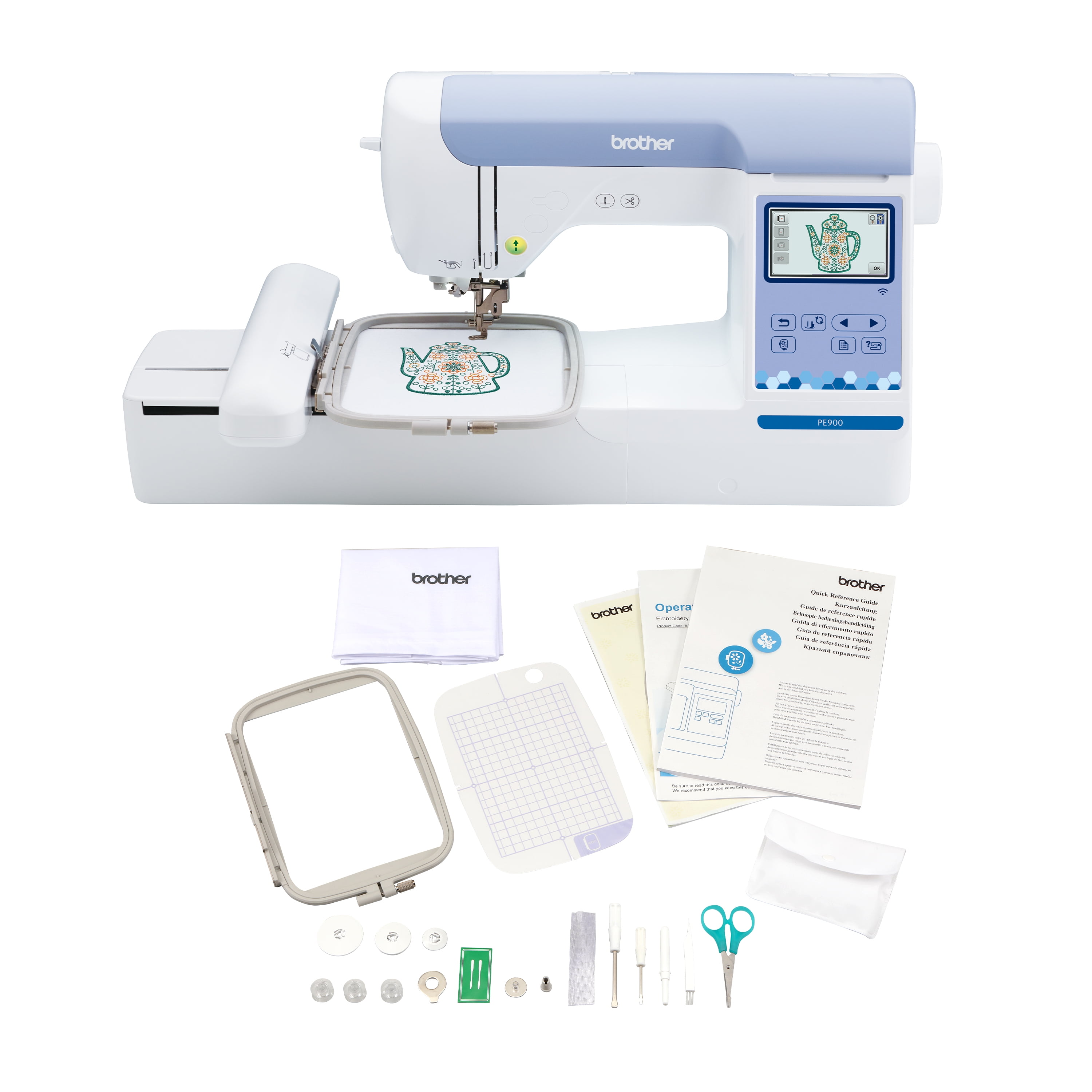
The PE900 is Brother’s embroidery-only sweet spot, and the logic for it is simple: if you already own a sewing machine you like, why pay for a second one inside your embroidery machine? The PE900 puts the entire budget into embroidery, with a 5×7″ hoop, 193 built-in designs, 13 lettering fonts, a 3.7″ color touchscreen, and wireless LAN so designs go from your computer to the machine without a USB stick shuffle.
It also cuts jump stitches automatically, which is one of those features you do not appreciate until you have trimmed a hundred little thread tails by hand. The 650 SPM embroidery speed is standard for this class, and the Artspira mobile app lets you create or download designs on your phone and send them over. Owner reviews are consistently positive, with beginners praising the on-screen tutorials and the straightforward hooping.
The honest limitation: it does not sew. Not a straight stitch, not a zigzag, nothing. If your sewing machine dies, this will not help you. And the 5×7″ hoop, while generous for the price, means large designs need rehooping, which is a skill in itself.
Good
✓ 5×7″ hoop, the largest embroidery field under ~$900
✓ 193 designs + 13 fonts built in, wireless LAN transfer
✓ Automatic jump stitch trimming, a genuine time saver
✓ 3.7″ touchscreen with on-screen tutorials, beginner-friendly
Watch out for
✕ Embroidery only, it cannot sew a single straight stitch
✕ 5×7″ still requires rehooping for large designs
✕ You need a separate sewing machine, factor that into the total cost
✕ Heavier than it looks, set up a permanent spot
Bottom line: The best embroidery machine for people who already sew. All embroidery, no compromises.
Skip if: you do not own a sewing machine, the SE1900 combo gives you both crafts for less total money.
2. Brother SE1900, Best Combo Machine
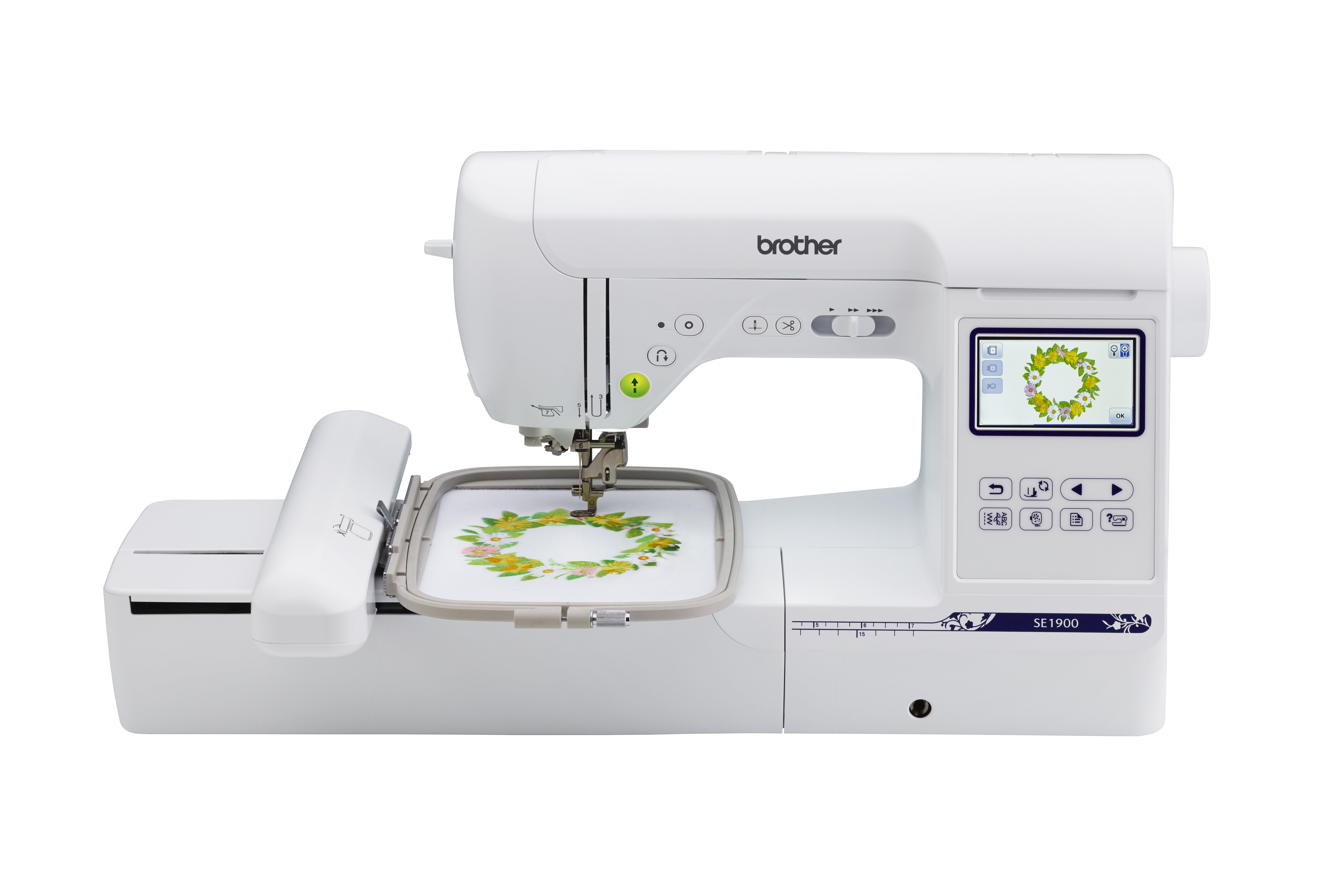
The SE1900 is the answer to “I want to sew AND embroider but I only have room and budget for one machine.” It is a full computerized sewing machine, 240 built-in stitches, automatic needle threader, drop-in bobbin, with an embroidery arm that attaches for a 5×7″ embroidery field with 138 built-in designs and 11 fonts. One machine, both crafts, usually ~$600–$800.
As a sewing machine it is genuinely capable, not an embroidery machine with sewing bolted on. The 240 stitches cover everything from utility to decorative, and the 3.2″ LCD touchscreen handles both modes. As an embroidery machine it gives up a little to the PE900: 138 designs instead of 193, no wireless LAN (USB transfer only), and a smaller screen. But it sews, which the PE900 cannot do at any price.
The practical consideration is switching. Moving between sewing and embroidery modes means attaching and removing the embroidery arm and swapping feet, which takes a few minutes. If you embroider daily and sew daily, that friction adds up, and two dedicated machines start making sense. For most beginners who do both occasionally, it is a non-issue.
Good
✓ One machine does both crafts, 240 stitches + 138 embroidery designs
✓ 5×7″ embroidery hoop, same generous field as the PE900
✓ Full-featured sewing machine, not a compromised hybrid
✓ Usually cheaper than buying a separate sewing machine and embroidery machine
Watch out for
✕ No wireless LAN, USB transfer only
✕ Fewer built-in designs than the PE900 (138 vs 193)
✕ Mode switching takes a few minutes each way
✕ 3.2″ screen is smaller than the PE900’s 3.7″
Bottom line: The best single-machine solution for someone starting both crafts at once.
Skip if: you already own a sewing machine you love, the PE900 is the better embroidery machine for similar money.
3. Brother SE700, Best Budget Combo
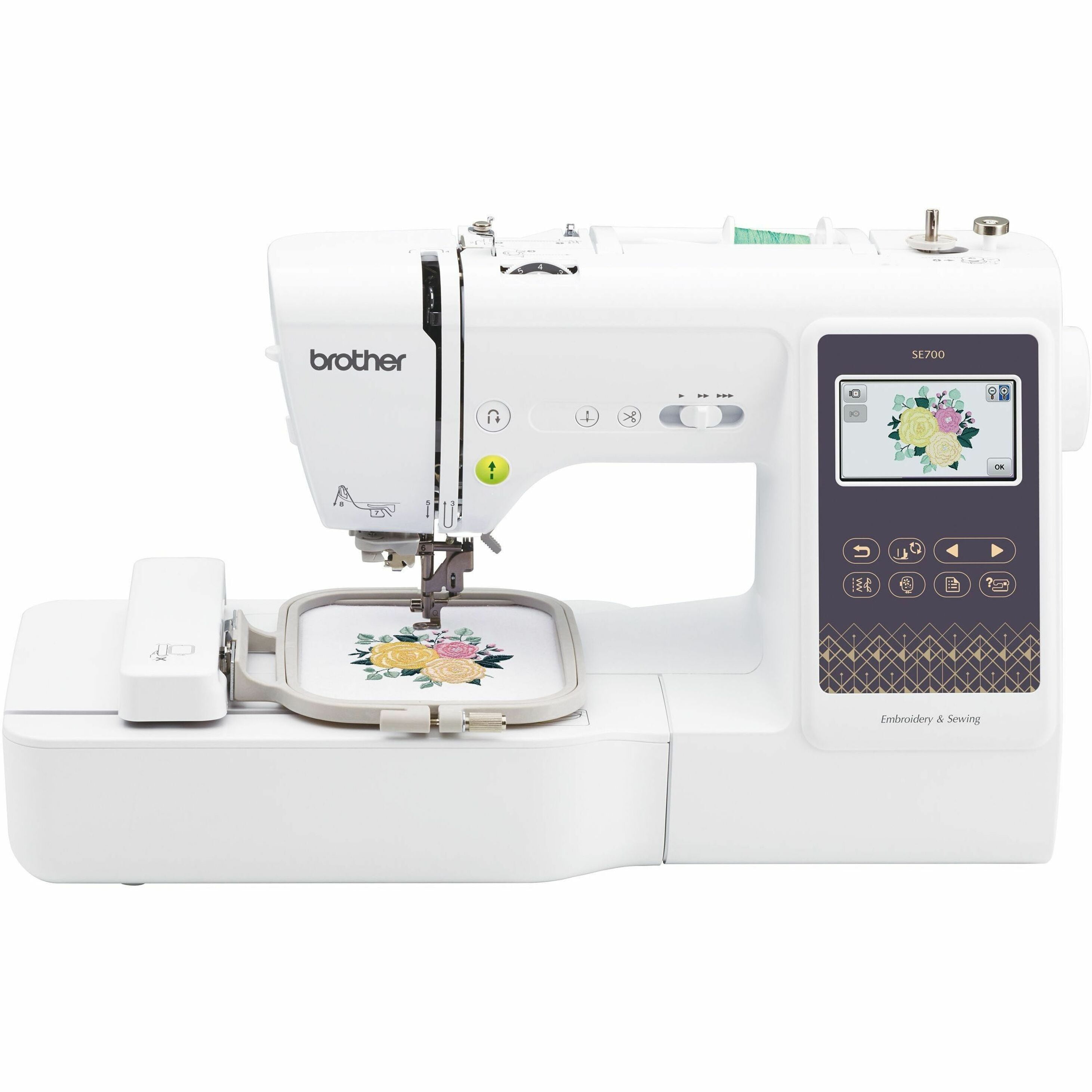
The SE700 is the SE1900’s little sibling, and the family resemblance is strong: a computerized sewing and embroidery combo with wireless LAN, a 3.7″ touchscreen, 135 built-in embroidery designs, and 103 sewing stitches. The difference is the hoop, 4×4″ instead of 5×7″, and the price, usually ~$500–$620, the cheapest way to get wireless embroidery in a combo machine.
The 4×4″ hoop is the entire conversation. It handles monograms, patches, onesies, caps (with care), and small decorative projects beautifully. It does not handle jacket backs, large quilt labels, or anything ambitious without rehooping. Beginners consistently underestimate how fast they outgrow 4×4″, and consistently overestimate how much it bothered them while learning. For a first embroidery machine, 4×4″ is honest.
Wireless LAN at this price is the standout feature. Being able to send designs from your computer without USB juggling removes one of the classic beginner friction points, and the Artspira app integration is genuinely useful.
Good
✓ Cheapest wireless combo machine, 135 designs + 103 stitches
✓ 3.7″ touchscreen, Artspira app, USB and wireless transfer
✓ 4×4″ hoop is honest for learning, monograms, patches, small gifts
✓ Compact and lighter than the bigger combos
Watch out for
✕ 4×4″ hoop limits design size, you will outgrow it if embroidery sticks
✕ 103 sewing stitches vs the SE1900’s 240
✕ Fewer built-in designs than its bigger siblings
✕ Rehooping large designs is a skill you will need sooner
Bottom line: The cheapest frustration-free way to start embroidering with wireless convenience.
Skip if: you already know you want larger designs, the SE1900’s 5×7″ hoop is worth the step up.
4. Brother PE535, Cheapest Worth Buying

The PE535 is the floor for honest embroidery machines: 80 built-in designs, 9 fonts, a 4×4″ hoop, a 3.2″ color touchscreen, and USB design transfer, usually ~$350–$470. It is embroidery-only, like the PE900, but at half the price, with the expected compromises.
What it gets right: the touchscreen is clear, the built-in tutorials walk beginners through their first projects, and 4.5 stars across 1,700+ ratings says it delivers what it promises. The USB port accepts your own designs, so you are not limited to the 80 built-ins. For monograms, patches, and small gifts, it does the job.
What it gives up: no wireless (USB only), a smaller design library, a smaller screen than the newer models, and the 4×4″ hoop ceiling. It is also the machine most likely to leave you wanting more within a year if embroidery becomes a real hobby. But as a low-risk entry point, it is honest, and honesty is rare at this price.
Good
✓ Lowest honest entry price into machine embroidery
✓ 4.5 stars across 1,700+ ratings, proven beginner-friendly
✓ Touchscreen with tutorials, USB design import
✓ 25-year limited warranty, Brother support for life
Watch out for
✕ 4×4″ hoop and 80 designs, the smallest canvas here
✕ No wireless, USB transfer only
✕ Embroidery only, you still need a sewing machine
✕ Most likely to feel limiting within a year of regular use
Bottom line: The minimum viable embroidery machine from a brand you can trust.
Skip if: you can stretch to the SE700, wireless and the bigger ecosystem are worth the difference.
5. Janome Memory Craft 400E, Biggest Hoop Step-Up

The MC400E exists for one reason: hoop size. Its 7.9×7.9″ embroidery field dwarfs everything else on this list, which means designs that need rehooping twice on a 5×7″ machine stitch in a single hooping here. For quilt labels, jacket backs, large home decor pieces, and anyone doing production-style embroidery, that is transformative. It carries 160 built-in designs, 6 monogramming fonts, USB import, and stitches up to 860 SPM.
Janome’s reputation for stitch quality carries over, and the machine includes thoughtful pro features: programmable jump thread trimming, adjustable speed while embroidering, auto return after thread breaks, and a bobbin thread sensor. These are the features that separate a frustrating embroidery session from a smooth one.
The price is the conversation: ~$1,300–$1,500 is serious money, triple the PE535. It is also embroidery-only, heavier than the Brothers, and the design library, while high quality, is smaller than Brother’s. This is not a beginner’s first machine, it is the machine a beginner upgrades to when the hoop becomes the limit.
Good
✓ 7.9×7.9″ hoop, by far the largest embroidery field here
✓ 860 SPM, fastest embroidery speed on this list
✓ Pro features: jump thread trimming, thread break recovery, bobbin sensor
✓ Janome stitch quality, excellent for dense designs
Watch out for
✕ ~$1,300–$1,500, serious money for a second craft machine
✕ Embroidery only, and heavy enough to need a permanent spot
✕ 160 designs is fewer than Brother’s libraries
✕ Overkill unless you know you need the hoop size
Bottom line: The hoop-size answer for embroiderers who have outgrown 5×7″.
Skip if: you are just starting, learn on a cheaper machine first and upgrade when the hoop, not your skill, is the limit.
What We’d Skip
- Skip no-name embroidery machines. Embroidery is precision work, and a cheap machine with sloppy tension will produce bird nests, not designs. Brother and Janome have the design libraries, the support, and the parts. The $200 Amazon mystery brand has none of those.
- Skip buying for hoop size you will not use. A 7.9×7.9″ hoop is wonderful and wasted on someone embroidering onesies. Match the hoop to your actual projects, not your aspirations.
- Skip the Disney-licensed models unless the designs matter to you. They cost more for a design pack you can often buy separately. The base models are the better value.
- Skip embroidery if you hate prep work. Hooping, stabilizer selection, and thread changes are most of the craft. The machine stitching is the reward at the end. If that sounds tedious, embroidery will frustrate you regardless of machine.
Comparison Table
| Machine | Type | Hoop Size | Designs / Fonts | Sewing Stitches | Wireless | Approx. Price | |
|---|---|---|---|---|---|---|---|
| Brother PE900 | Embroidery only | 5×7″ | 193 / 13 | N/A | Yes | ~$700–$900 | Check Price on Amazon |
| Brother SE1900 | Combo | 5×7″ | 138 / 11 | 240 | No (USB) | ~$600–$800 | Check Price on Amazon |
| Brother SE700 | Combo | 4×4″ | 135 / 10 | 103 | Yes | ~$500–$620 | Check Price on Amazon |
| Brother PE535 | Embroidery only | 4×4″ | 80 / 9 | N/A | No (USB) | ~$350–$470 | Check Price on Amazon |
| Janome MC400E | Embroidery only | 7.9×7.9″ | 160 / 6 | N/A | No (USB) | ~$1,300–$1,500 | Check Price on Amazon |
Prices fluctuate frequently on Amazon; click through for the current price.
Buying Guide: What Actually Matters in a First Embroidery Machine
Hoop size is the spec that matters most. Everything else being equal, a bigger hoop means fewer rehoopings, larger designs, and less frustration. The honest tiers: 4×4″ for learning and small projects, 5×7″ for serious hobby embroidery, 7.9×7.9″ for production and large pieces. Buy the biggest hoop your budget allows, because hoop size is the one thing you cannot upgrade later.
Combo vs dedicated is a lifestyle question. A combo machine (SE1900, SE700) gives you two crafts in one body and one price, ideal when space, budget, or uncertainty is the constraint. A dedicated machine (PE900, PE535, MC400E) is the better embroidery machine dollar for dollar, ideal when you already sew. Neither is wrong. The wrong choice is buying a combo and never sewing, or buying dedicated and then needing a sewing machine too.
Wireless transfer is underrated. Moving designs via USB stick works, but it is 2009 technology and a constant small friction. Wireless LAN (PE900, SE700) lets you send designs straight from your computer. It will not make or break your embroidery, but you will notice its absence.
Stabilizer matters more than the machine. This is the thing beginners resist hearing: most embroidery failures are stabilizer failures, not machine failures. Cut-away for knits, tear-away for wovens, water-soluble for sheer fabrics. Budget $30–$50 for a stabilizer starter assortment alongside your machine, it will save you more grief than any feature.
Design libraries are a starting point, not a destination. Built-in designs get you stitching on day one, but within months you will be buying or downloading designs. Check that the machine reads common formats and has USB or wireless import, all five here do. The free design ecosystem is enormous, you will never run out.
Thread and needles are ongoing costs. Embroidery thread, bobbins, and needles add up. A basic thread set in usable colors runs $25–$40, and you will want it. Use proper embroidery needles, universal needles cause more thread breaks in embroidery than in regular sewing.
How We Tested
We did not unbox these embroidery machines in a lab, and we won’t pretend we did. Instead, we cross-referenced manufacturer specifications against live retailer listings, read thousands of verified owner reviews hunting for failure patterns rather than star counts, and weighted the factors that actually decide a beginner’s embroidery experience: hoop size, design transfer ease, touchscreen clarity, and stabilizer forgiveness. We paid special attention to the combo-vs-dedicated decision since it is the question beginners ask most, and to long-term reports about software, updates, and design compatibility. Prices shown are typical US street bands; Amazon moves them constantly, so confirm at checkout.
Keep Reading
FAQs
Should I get a combo machine or a dedicated embroidery machine?
If you already own a sewing machine you like, get a dedicated embroidery machine, you get more embroidery for the money. If you are starting both crafts, or space and budget allow only one machine, a combo is the sensible choice. Our SE1900 vs PE900 comparison walks through this exact decision.
What size hoop do I actually need?
4×4″ covers monograms, patches, onesies, and small gifts, which is most of what beginners embroider. 5×7″ opens up larger designs, quilt labels, and tote bags without rehooping. Above that is production territory. When in doubt, 5×7″ is the sweet spot most hobbyists land on.
Can I use my own designs, or only the built-in ones?
All five machines accept your own designs via USB or wireless. The built-in libraries are for day one; the real ecosystem is the enormous world of downloadable designs, many free. Just check format compatibility, Brother uses PES, Janome uses JEF, and most design sellers offer both.
Why does my embroidery look terrible when the design preview looked fine?
Nine times out of ten: stabilizer, hooping, or thread. Wrong stabilizer for the fabric is the top cause, followed by fabric shifting in a loosely hooped frame, followed by old or wrong-type thread. Rethread with fresh embroidery thread, rehoop drum-tight with the right stabilizer, and try again before blaming the machine.
Do I need special software?
Not to start. The machines handle built-in and downloaded designs on their own. Digitizing software, for turning your own artwork into stitch files, is a separate purchase ($500+ for the real thing) and a separate hobby. Learn to embroider first; digitize later if the bug bites.
How much should I budget beyond the machine?
Plan $50–$100 for starter supplies: stabilizer assortment, embroidery thread set, extra bobbins, and proper embroidery needles. These are not optional, they are the difference between a good first month and a frustrating one.
Verdict
If you already sew and want the best embroidery experience for the money: buy the Brother PE900. The 5×7″ hoop, wireless transfer, and 193 designs make it the dedicated machine to beat.
If you need one machine for both crafts: buy the Brother SE1900. It sews like a real sewing machine and embroiders like a proper embroidery machine, which is rarer than it sounds.
And if your budget is tight but the embroidery bug has bitten: the Brother PE535 gets you honestly started for the price of a nice dinner out (several of them, but still).
The wrong choice is not any machine on this list, it is the $200 mystery-brand embroidery machine with no design support, no stabilizer guidance, and no one to call when your first project nests.
Pingback: Brother SE1900 vs PE900 (2026): Combo Machine or Dedicated Embroidery?