
As an Amazon Associate I earn from qualifying purchases.
“How much does it cost to start sewing?” is one of the most common questions beginners ask, and most answers are either suspiciously low (“just $50!”) or discouragingly vague (“it depends”). Here’s the honest version: you can start sewing for around $150-$200, you can start comfortably for $400-$500, and a full setup that will last you years runs about $1,000. Anyone telling you it costs less than $150 is forgetting half the supplies.
This guide breaks down exactly where the money goes at each tier, what to buy first versus later, and where beginners waste money. No fluff, just the math.
TL;DR: Budget ~$150-$200 for the bare minimum (a basic machine plus essential tools and fabric), ~$400-$500 for a comfortable start (better machine, rotary cutting setup, quality thread, good fabric), or ~$1,000 for a full setup (heavy-duty or computerized machine, serger fund, proper pressing station, pattern library). The machine is half the cost at every tier. Buy tools once, buy fabric forever.
Tier 1: The Bare Minimum (~$150-$200)
This is the “I want to try sewing without committing” budget. It gets you a working machine, the essential tools, and enough fabric for your first few projects. Nothing fancy, everything functional.
Sewing machine: ~$130-$160. The Brother XM2701 is the default recommendation here, and the sales numbers back it up: it’s one of the best-selling sewing machines on Amazon with tens of thousands of reviews. Mechanical, 27 stitches, automatic needle threader, drop-in bobbin, 12.6 lbs. It does everything a beginner needs and nothing they don’t.

Essential tools: ~$30-$50. You need: fabric scissors (not paper scissors, ~$10-$15), a seam ripper (~$3, you will use it constantly), pins and a pincushion (~$8), a measuring tape (~$3), tailor’s chalk or fabric markers (~$5), and a pack of universal needles (~$5). That’s it. Everything else is a luxury at this stage.
Fabric and thread: ~$20-$30. Two or three yards of quilting cotton (~$8-$12/yard at big-box stores, less on sale), one spool each of black, white, and a color you like (~$3-$4 each for decent polyester thread). Your first projects should be simple: pillowcases, tote bags, zip pouches. These teach cutting, straight seams, and finishing without expensive materials.
Tier 1 total: ~$180-$240. Yes, slightly above the fantasy $150 figure, because thread and needles and chalk exist. This setup will carry you through your first 10-20 projects easily.
Tier 2: The Comfortable Start (~$400-$500)
This is the tier I’d recommend to anyone who knows they want to keep sewing. The machine is better, the cutting setup is proper, and you’re not fighting your tools anymore.
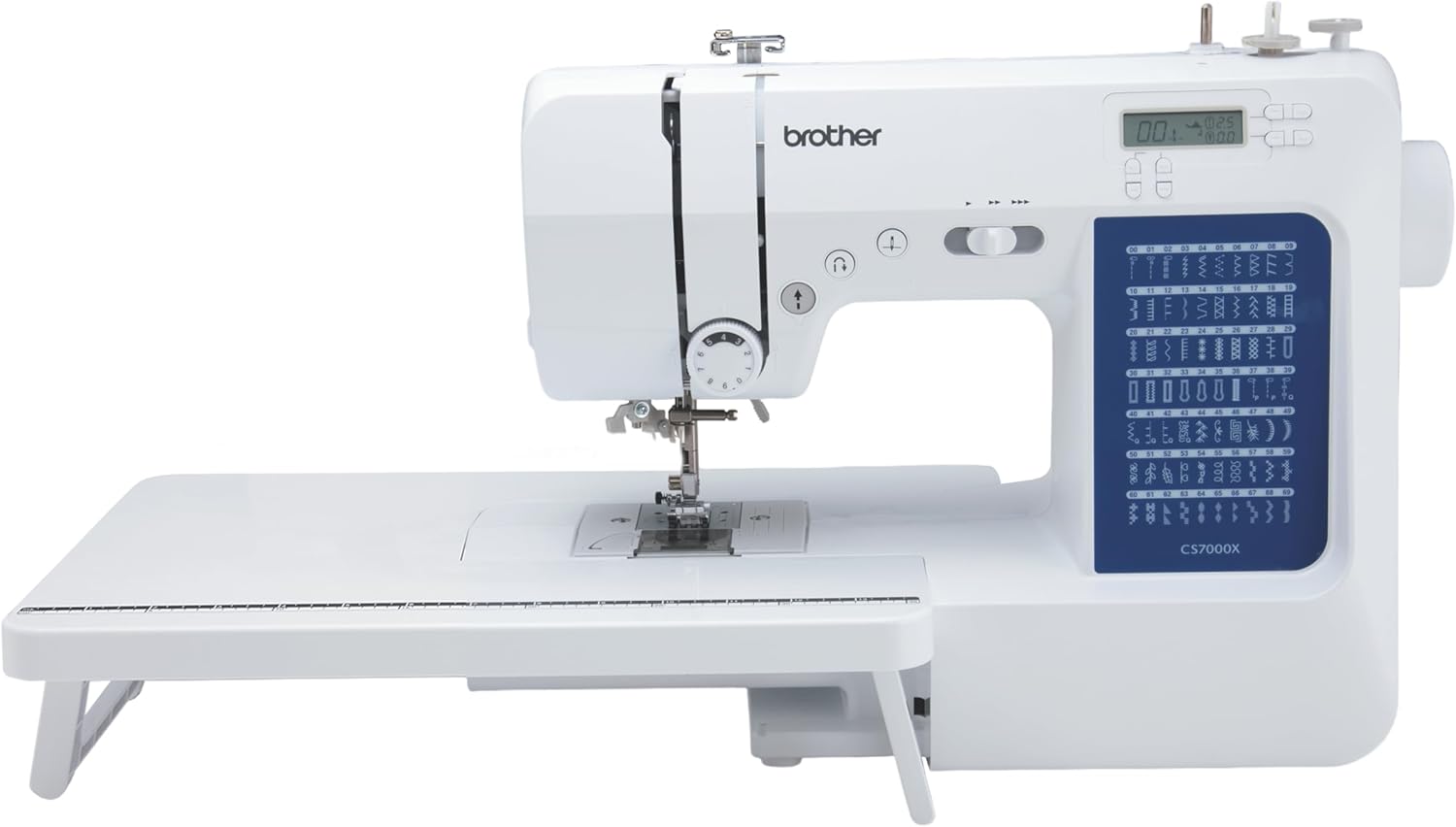
Sewing machine: ~$200-$280. Step up to a computerized machine like the Brother CS7000X (70 stitches, LCD, improved threader, wide table included) or, if you sew heavy fabrics, the Janome HD3000 (all-metal frame, ~$400). The computerized jump matters: easier stitch selection, speed control, and features that make learning faster.

Cutting setup: ~$50-$70. A 45mm rotary cutter (~$20), a 24×36-inch self-healing cutting mat (~$30-$40), and a clear acrylic quilting ruler (~$15). This trio cuts your fabric prep time in half and dramatically improves accuracy. If you buy one upgrade beyond the machine, make it this.
Pressing: ~$30-$40. A decent iron you may already own, plus a wool pressing mat (~$25-$35). Pressing every seam is the difference between homemade-looking and professional-looking results. The wool mat holds heat and makes pressing faster and more effective.
Thread and notions: ~$40-$60. A starter set of quality polyester thread in common colors, extra bobbins for your specific machine, a variety of needles (universal, denim, ballpoint for knits), good pins, and a proper seam gauge. Buy thread in sets, it’s far cheaper per spool.
Fabric: ~$50-$80. Enough for 4-6 real projects: a few yards each of quilting cotton, a bottom-weight for a tote or pants, and maybe a knit to try. Shop sales and clearance sections aggressively, fabric is the one cost that never stops.
Patterns: ~$0-$30. Free patterns from the internet cover your first year. Paid indie patterns ($10-$15 each) are worth it when you want something specific. Don’t build a pattern library before you know what you like sewing.
Tier 2 total: ~$400-$520. This is a setup with no weak links. Everything works well, nothing fights you, and you won’t need to upgrade for a long time.
Tier 3: The Full Setup (~$1,000)
This is the “I’m committed and I want the good stuff” tier. It includes a machine that will last a decade, the specialty tools that make sewing genuinely enjoyable, and enough materials to sew without constraint.
Sewing machine: ~$400-$600. The Janome HD3000 (~$400) for heavy-duty mechanical reliability, or step into the $500-$600 computerized range (Janome 4120QDC, Brother machines with more throat space). At this tier, you’re buying longevity and capability: all-metal internals, bigger workspace, better feed systems.
For heavy fabrics specifically, the Singer Heavy Duty 4423 (~$200-$250) is the budget heavy-duty king: metal frame, 1,100 stitches per minute, and a motor with real piercing power. It’s the machine denim and canvas sewists swear by.

Serger fund: ~$250-$300. A beginner serger (Brother 1034D or similar) is the single biggest upgrade to finished garment quality. It doesn’t have to be day one, but budget for it within the first year if you sew garments. See our picks: Best Sergers for Beginners (2026).
Pressing station: ~$80-$120. A quality iron (or a gravity-feed iron if you’re serious), a large wool pressing mat or a proper ironing board with a good cover, a tailor’s ham and seam roll for pressing curves. Pressing is half of sewing, and good tools make it fast instead of tedious.
Cutting and marking: ~$80-$100. The rotary setup from Tier 2, plus a second smaller rotary cutter for curves, quality fabric shears (not the $10 pair), a full ruler set, and good marking tools. Add a dress form ($100-$200) if you sew garments for yourself, it pays for itself in fitting accuracy.
Thread, needles, notions: ~$80-$100. A real thread stash, specialty needles for every fabric type, quality pins and clips, interfacing in common weights, zippers and buttons in assorted sizes. The “notions drawer” that experienced sewists accumulate over years, bought upfront.
Fabric stash: ~$100-$150. Enough to sew freely for months without a store trip. Buy versatile solids and prints in fibers you actually sew.
Tier 3 total: ~$990-$1,370. A setup that would make most experienced sewists nod approvingly. Nothing here needs upgrading for years.
What to Buy First vs What Can Wait
Buy first: the machine, fabric scissors, seam ripper, pins, measuring tape, chalk, needles, thread, and fabric for your first project. This is the Tier 1 list. You literally cannot sew without these.
Buy within the first month: the rotary cutter, mat, and ruler. You’ll feel the difference immediately, and hand-cutting with scissors gets old fast.
Buy when you feel the limitation: a better iron, specialty presser feet, a walking foot, better lighting. These solve specific frustrations. Buy them when the frustration appears, not before.
Wait six months: the serger, the dress form, the pattern library, the fabric stash. These are commitments to a sewing identity you haven’t discovered yet. The sewist who buys a serger in week two usually sells it in month six.
Never buy out of guilt: the $400 scissors, the premium thread set in 100 colors, the cabinet. Buy tools when your current tools limit you, not when marketing tells you to.
Where Beginners Waste Money
The too-cheap machine. A $60 no-name machine from a discount store will jam, skip stitches, and convince you that you’re bad at sewing. You’re not, the machine is. The $130-$160 floor exists for a reason: below it, quality falls off a cliff.
The too-expensive machine. A $1,500 computerized embroidery combo as a first machine is like learning to drive in a Ferrari. You’ll use 5% of its features and be terrified of breaking it. Start simple, upgrade when you know why.
Fabric hoarding. Buying 40 yards of clearance fabric before you’ve finished your first project. Buy fabric for the project in front of you. Your taste will change, your skills will change, and that clearance bin fabric will still be there.
Gadget accumulation. Seam guides, specialty feet, and attachments are fun to buy and rarely used. Master the basics with the feet that came in the box. Add attachments when a specific project demands one.
Premium thread too early. Good thread matters, but a beginner can’t tell the difference between decent $4 thread and premium $12 thread. Upgrade your thread when your skills can use it.
FAQs
Can I really start sewing for under $200?
Yes. A Brother XM2701 (~$130-$160) plus $30-$50 in basic tools and $20-$30 in fabric and thread gets you sewing real projects. It won’t be luxurious, but it will be fully functional.
Is a used sewing machine a good way to save money?
It can be, if you buy smart. A serviced used machine from a dealer (often $100-$200 for a solid mechanical) is excellent value. Avoid used machines from sellers who can’t demonstrate them sewing, and avoid anything that “just needs a tune-up.” Beginner tip: the used market is best for your second machine, when you know what to check.
Do I need a serger to start?
No. A serger is a wonderful second-year purchase for garment sewists, but your sewing machine’s zigzag and overcast stitches handle seam finishing fine while you’re learning. Don’t let anyone tell you it’s essential on day one.
What’s the single best upgrade after the basics?
A rotary cutter, self-healing mat, and acrylic ruler. Around $60 total, and it transforms the most tedious part of sewing (cutting fabric) from a chore into a two-minute task.
How much does sewing cost per month once I’m set up?
After the initial investment, most hobbyists spend $30-$80 a month on fabric, thread, and patterns. It scales with ambition: quilters and garment sewists who buy premium fabric spend more, menders and crafters spend less.