
As an Amazon Associate I earn from qualifying purchases.
If you’re shopping for your first embroidery machine, you’ve probably noticed something odd: Baby Lock and Brother machines look suspiciously similar. Similar screens, similar hoops, similar features, similar price classes. That’s not a coincidence. Baby Lock and Brother are sister companies, and their machines share a lot of DNA under the hood.
So why do both brands exist, and which one should a beginner buy? The answer has less to do with the machines than with how you buy them. Baby Lock sells through local dealers who offer classes, setup help, and in-person support. Brother sells everywhere, including Amazon, at lower prices, with thousands of public reviews. The machines are close cousins. The buying experience is completely different.
Let’s break down what actually differs and who should pick which.
TL;DR: The machines are close relatives, so buy based on the experience you want. Choose Baby Lock (e.g., the Flourish combo, ~$900-$1,000 through dealers) if you want in-person classes, setup lessons, and a local expert to call when embroidery confuses you. Choose Brother (PE900 ~$650-$800, SE700 ~$350-$450 on Amazon) if you’re comfortable learning from YouTube, want the lower price, and value easy returns and thousands of real owner reviews.
At a Glance
| Baby Lock | Brother | |
|---|---|---|
| Relationship | Sister company to Brother, shared engineering | The parent-side brand, sold everywhere |
| Entry embroidery (dedicated) | Higher-priced dealer models | Brother PE900, ~$650-$800 |
| Combo sewing + embroidery | Baby Lock Flourish, ~$900-$1,000 | Brother SE700, ~$350-$450 |
| Where to buy | Authorized dealers only | Amazon, big-box stores, online |
| Setup help | Dealer classes and lessons | YouTube, manuals, forums |
| Price positioning | Premium for equivalent hardware | Aggressive, often 30-40% less |
| Reviews | Few public reviews (dealer sales) | Tens of thousands on Amazon |
| Who it’s for | Beginners who want hand-holding | Self-sufficient beginners and bargain hunters |
Baby Lock in Detail
Baby Lock’s pitch to embroidery beginners is simple: you will not be alone. Buy a machine like the Flourish (a sewing and embroidery combo, roughly $900-$1,000) or the entry-level Zeal (a basic sewing machine around $400), and your dealer typically includes setup lessons, project classes, and a phone number you can call when the machine throws an error you’ve never seen. For someone who’s never touched an embroidery machine, that safety net is genuinely valuable.
The hardware is solid. Because Baby Lock and Brother share engineering, you’re getting proven mechanics: reliable hooping systems, good onboard editing, wireless design transfer on current models, and stitch quality that owners consistently praise. Baby Lock also tends to bundle more generous accessory packages and runs dealer-exclusive models you won’t find discounted online, which protects the brand’s premium positioning.
The catch is the dealer-only model. You can’t buy a Baby Lock embroidery machine on Amazon. There are no public star ratings to check, no price competition between sellers, and your experience depends heavily on the quality of your local dealer. A great dealer makes Baby Lock worth the premium. A mediocre one leaves you paying more for the same hardware with none of the promised support.
Good
- Dealer classes and setup lessons flatten the brutal embroidery learning curve
- In-person support when (not if) something confuses you in the first months
- Proven hardware shared with Brother’s engineering
- Generous accessory bundles on many models
- Premium feel and finish on mid-range and up machines
Watch out for
- No Amazon listings, no public reviews, no price competition
- Typically 30-50% more expensive than equivalent Brother hardware
- Your experience lives or dies with your local dealer
- Beginner models like the Zeal are sewing-only, don’t confuse the lineup
Brother in Detail
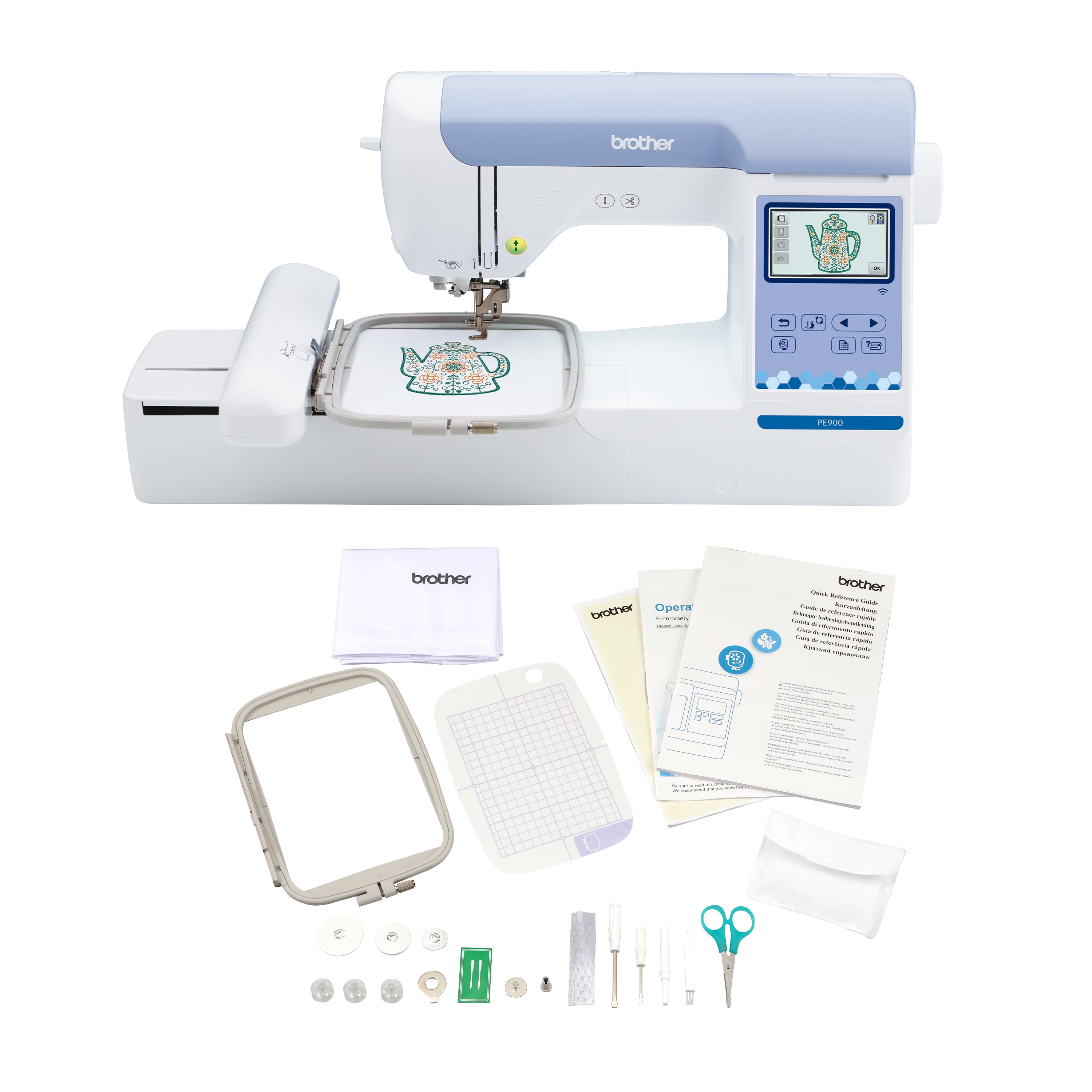
Brother is the reason home embroidery is affordable. The PE900, a dedicated embroidery machine with a 5×7-inch hoop, 193 built-in designs, wireless LAN, and a 3.7-inch touchscreen, typically sells for $650-$800 on Amazon. The SE700, a sewing-and-embroidery combo with a 4×4-inch hoop and 135 designs, often goes for $350-$450. Both carry thousands of owner reviews you can actually read before buying.
The PE900 is the pick for committed embroiderers: the 5×7 hoop is the real headline, because hoop size is the single biggest limiter in embroidery, and a 4×4 hoop (like the SE700’s) starts feeling small fast. The SE700 is the pick for the curious: it’s a fully capable computerized sewing machine that also embroiders, so if embroidery turns out not to be your thing, you still own a good sewing machine.
What you give up vs Baby Lock: nobody unboxes it with you. Learning embroidery from YouTube and manuals works, thousands of owners do it, but the first month has a steeper curve without a teacher. Brother’s support is phone and online, fine for most issues, not the same as a dealer who knows your name.

Good
- Best prices in home embroidery, often hundreds less than Baby Lock equivalents
- Massive public review base, you can research before buying
- Easy Amazon purchase, shipping, and returns
- PE900’s 5×7 hoop is a meaningful upgrade over 4×4 beginner hoops
- SE700 is a great two-in-one for the embroidery-curious
Watch out for
- No dealer lessons, you’re learning from videos and forums
- Build and finish feel a notch below Baby Lock’s premium models
- The SE700’s 4×4 hoop limits design size, plan to want bigger
- Support is remote, not in-person
Head-to-Head
Hardware: Near-tie, with Baby Lock edging ahead on premium models. The shared engineering means comparable stitch quality and reliability at similar tiers. Baby Lock’s higher-end machines add nicer screens and finish, but the core embroidery mechanics are cousins.
Price: Brother, decisively. A Brother SE700 combo often costs less than half of a Baby Lock Flourish. Even the dedicated PE900 usually undercuts Baby Lock’s dedicated embroidery machines by hundreds.
Beginner support: Baby Lock, if your dealer is good. In-person lessons and a help line beat YouTube for the first 30 days of embroidery. But this advantage is dealer-dependent, and motivated self-learners do fine with Brother.
Research and reviews: Brother, overwhelmingly. Tens of thousands of Amazon reviews vs essentially none for Baby Lock. If you research purchases heavily before buying, Brother’s transparency is a real comfort.
Hoop size (the thing that actually matters): Both brands offer 5×7 and larger hoops as you move up. At the entry level, Brother’s PE900 (5×7) gives you more room than most beginner combos. Whatever brand you pick, buy the biggest hoop you can afford, hoop envy is the most common embroiderer regret.
Resale: Slight edge to Baby Lock, which holds value better in the used market, partly because dealer pricing never collapses the way Amazon pricing does.
Verdict: Who Should Buy Which
Buy Baby Lock if you’re new to embroidery, you learn best in person, and you have a good local dealer. The lessons and support genuinely flatten the learning curve, and for a nervous beginner, that’s worth real money. Test-sew at the dealer before you commit, and judge the dealer as much as the machine.
Buy Brother if you’re comfortable learning from videos, you want the best price, or you’re not sure embroidery is your thing yet. The SE700 is the perfect low-risk entry: a good sewing machine that also embroiders. The PE900 is the right pick once you’re committed and want the bigger hoop. Read the Amazon reviews, buy during a sale, and put the money you saved toward thread and stabilizer, which you’ll need plenty of.
The honest shortcut: if you can’t visit a dealer easily, the decision is made for you. Buy Brother. The dealer advantage only exists if you actually use the dealer.
FAQs
Are Baby Lock and Brother the same company?
They’re sister companies with shared engineering and manufacturing ties, which is why their machines look and feel similar. They’re operated as separate brands with different sales models: Baby Lock is dealer-only, Brother sells through mass retail.
Is a combo machine or a dedicated embroidery machine better for beginners?
A combo (like the SE700 or Flourish) is better if you’re unsure about embroidery, because you still get a full sewing machine. A dedicated machine (like the PE900) is better once you’re committed, because you get a bigger hoop and embroidery-focused features. You can’t sew and embroider simultaneously on a combo, which matters if you do both a lot.
How important is hoop size really?
It’s the most important spec. A 4×4-inch hoop limits you to small designs (think shirt pockets and onesies). A 5×7 hoop opens up most common projects. Whatever you buy, experienced embroiderers almost universally say they wished they’d bought bigger.
Can I learn embroidery without dealer classes?
Yes. Thousands of Brother owners learn from YouTube tutorials, the manual, and forums. The learning curve is real either way, dealer classes just make the first month less frustrating. Budget extra time, not extra money, if you go the self-taught route.
Do Baby Lock machines really cost that much more?
For equivalent hardware, typically 30-50% more, and sometimes more than that. You’re paying for the dealer network, classes, and support, not just the machine. Whether that’s worth it depends entirely on how much you’ll use those services.