
As an Amazon Associate I earn from qualifying purchases.
The Singer 9960 vs 9970 question comes up constantly, and it’s a confusing one, because Singer basically sold the same machine twice under two different model numbers. The 9970 was a short-lived sibling of the 9960, sold for a limited time, then discontinued. The 9960 is still on shelves. If you’re staring at both names wondering which one to buy, here’s the short version: buy the 9960 new, and only consider a 9970 if you find one cheap on the used market. The rest of this article explains why, what actually differs between them, and where the 9980 and 9985 fit into the picture.
TL;DR: The Singer 9960 and 9970 share the same 600-stitch computerized platform, the same 850 SPM top speed, and the same 13 one-step buttonholes. The differences are cosmetic, a different outer housing and a different presser foot bundle. The 9970 was discontinued years ago, so the 9960 is the only one you can buy new with a warranty. Typical street price for the 9960 is around $500 to $550.
At a Glance, Our Scores
| Pick | Best for | Our score | Typical price | Buy |
|---|---|---|---|---|
| Singer 9960 | Buying new with a warranty | 8.6/10, the safe buy, still sold and supported | ~$500–$550 | Check Price on Amazon |
| Singer 9970 | Only if found cheap used | 8.2/10, same machine inside, but discontinued, no warranty | Used only | No live listing, see used-market notes below |
Prices move constantly on Amazon, the “Check Price on Amazon” link takes you to the live 9960 listing.
Side-by-Side Comparison
| Buy | Singer 9960 | Singer 9970 |
|---|---|---|
| Built-in stitches | 600 | 600 |
| Stitch applications | 1,172 | ~1,000 (per original listings) |
| One-step buttonholes | 13 styles | 13 styles |
| Lettering fonts | 5 | 5 |
| Max speed | 850 SPM | 850 SPM |
| Needle positions | 25 | 25 |
| Bobbin | Top drop-in, Class 15 | Top drop-in, Class 15 |
| Needle threader | Automatic | Automatic |
| Thread cutter | Yes, push-button | Yes, push-button |
| Extension table | Included | Included |
| Presser feet | 13 included | Different bundle (varied by retailer) |
| Housing | White with teal wave graphic | Different faceplate/housing design |
| Weight | ~14.6–18 lbs (listings vary) | ~17.8 lbs |
| Warranty | 25-year limited (new) | None (discontinued) |
| Availability | Still sold new | Discontinued, used market only |
| Check Price on Amazon | No live listing |
Detailed Review: Singer 9960 Quantum Stylist

The 9960 is Singer’s long-running flagship computerized machine, and it’s been around long enough to build a real track record. Six hundred built-in stitches sounds like a lot, and it is, but the number that matters more is 1,172 stitch applications, which is Singer’s way of counting every variation those stitches can produce. You get 13 fully automatic one-step buttonholes, five built-in lettering fonts for monogramming, mirror imaging, and stitch elongation, which stretches decorative stitches wider for bolder effects.
The feature set is genuinely generous for the price. There’s an automatic needle threader, a push-button thread cutter that trims both threads at once, programmable needle up/down, a speed control slider, and a start/stop button so you can sew without the foot pedal. The extension table comes in the box, which matters for quilting, and Singer includes 13 presser feet covering the basics plus quilting and specialty work. The LCD screen is the old black-and-white style, not a touchscreen, but owners report it’s clear and the push-button stitch selection is straightforward.
At around $500 to $550 street price, the 9960 sits in an interesting spot. It’s roughly double the price of a Brother CS7000X with fewer “modern” conveniences, but it offers far more stitches, lettering, and a heavier feature set for garment construction and quilting. Reviewers on sewing forums tend to describe it as a machine that rewards learning: slightly intimidating at first because of the sheer number of options, but excellent once you’ve spent a weekend with the manual. With over 9,000 Amazon ratings averaging around 4.2 stars, it’s one of the most-reviewed computerized machines on the platform, and the complaints cluster around the usual computerized-machine themes (learning curve, the occasional tension quirk) rather than any single fatal flaw.
Good
✓ 600 stitches, 13 one-step buttonholes, and 5 lettering fonts, enormous creative range
✓ Push-button thread cutter and automatic needle threader save real time
✓ Extension table and 13 presser feet included, a genuine quilting-ready bundle
✓ Speed control slider plus start/stop button for pedal-free sewing
✓ Still sold new with Singer’s 25-year limited warranty, parts and support available
Watch out for
✕ The black-and-white LCD feels dated next to touchscreen competitors
✕ 600 stitches is overwhelming for beginners, expect a learning curve
✕ At ~$500+, it’s double the price of simpler computerized machines that sew just as well for basic projects
✕ Some owners report the machine is picky about thread quality, cheap thread causes jams
Bottom line: The definitive “buy it new” pick of this pair, and a lot of machine for the money if you’ll use the stitch library.
Skip if: you only need straight stitch, zigzag, and a buttonhole. A $200 machine does that job just as well.
Detailed Review: Singer 9970 Quantum Stylist
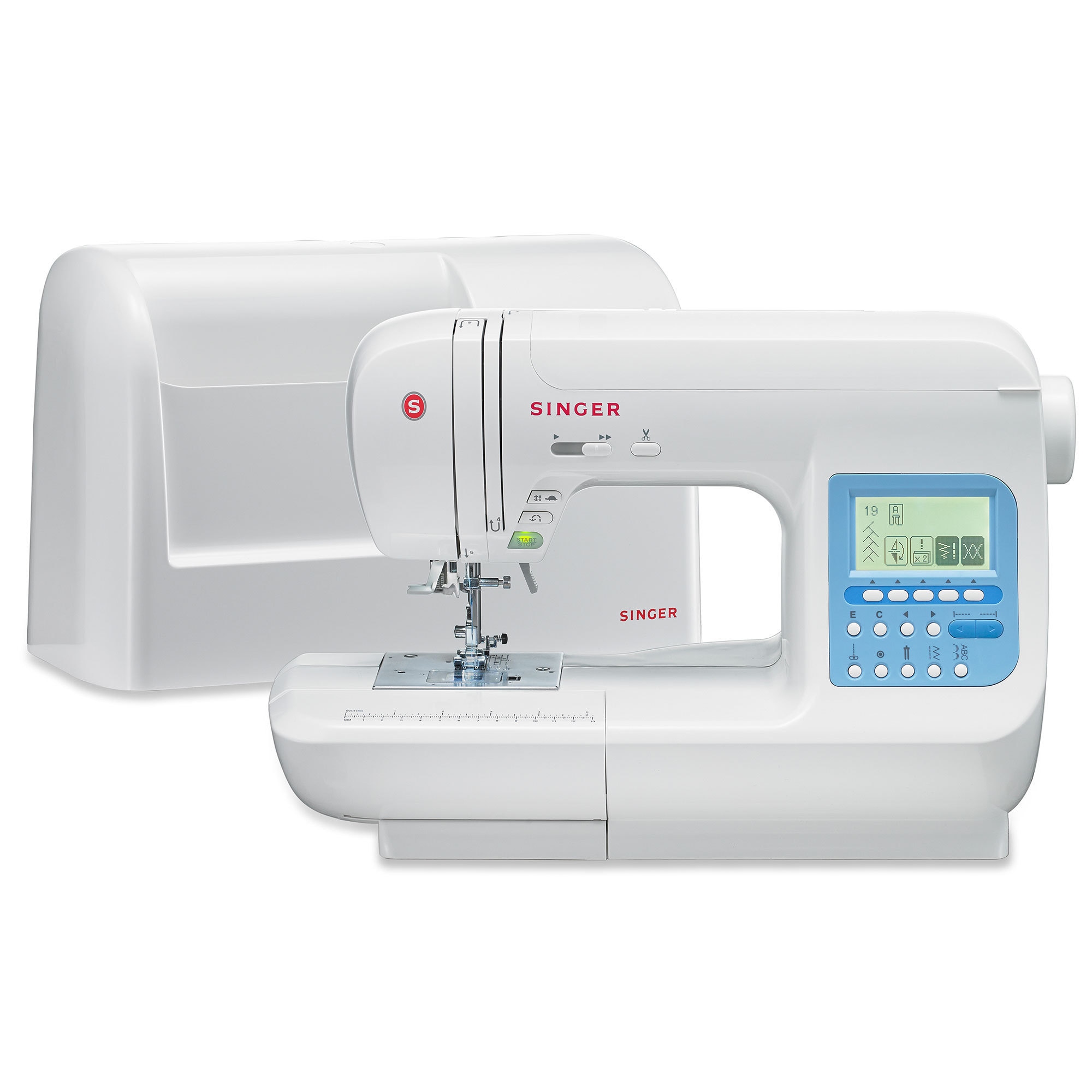
The 9970 is the ghost of this comparison. Singer released it as a sibling to the 9960 with, by every account from owners and sewing bloggers who tracked both machines, the same internal platform: 600 built-in stitches, 850 SPM top speed, 13 one-step buttonholes, 25 needle positions, drop-in bobbin, automatic needle threader, and an included extension table. The differences were the outer housing design and the presser foot bundle, which varied by retailer.
It was a short-lived machine. Singer discontinued the 9970 fairly quickly, and it never developed the 9960’s long sales history or review base. The owners who have them seem happy, based on the scattered forum posts and reviews that survive, with no pattern of complaints unique to the 9970. That’s reassuring but also thin evidence, since far fewer of them were sold.
Here’s the practical problem: there’s no new 9970 to buy. No warranty, no retailer support, no parts pipeline through Singer’s current lineup (though many parts are shared with the 9960, which helps). The only 9970s changing hands are used ones, and used computerized machines are a gamble. You can’t verify the electronics, the buttonhole mechanism, or the stitch quality until you’ve sewn on it, and a seller’s “works great” covers a lot of sins.
No live Amazon listing exists for the 9970. If you want this platform, buy the 9960 new via the link above. Only consider a 9970 if you find one locally for well under $200 and can test-sew on it before paying.
Good
✓ Same 600-stitch platform as the 9960, same speed, same buttonholes
✓ Extension table and hard cover were included in the original bundle
✓ Surviving owners report solid, trouble-free operation
✓ Can be a bargain if found cheap on the used market
Watch out for
✕ Discontinued, zero warranty, zero manufacturer support
✕ No way to verify a used unit’s electronics before buying unless you test it in person
✕ Far fewer owner reviews exist, so less community knowledge when something goes wrong
✕ Any “new in box” 9970 is over a decade old, belts and electronics age even on the shelf
Bottom line: A fine machine that you shouldn’t buy new because you can’t. Used only, cheap only, tested only.
Skip if: the used price is anywhere near a new 9960. The warranty alone is worth the difference.
So What’s Actually Different?
Beneath the housing, almost nothing. Both machines are built on Singer’s 600-stitch Quantum Stylist platform with the same stitch library, the same 850 SPM maximum speed, the same 13 one-step buttonhole styles, the same five lettering fonts, the same top drop-in bobbin, and the same automatic needle threader. Singer’s own history here is a known pattern: the company has repeatedly released the same internals under different model numbers with cosmetic changes for different retailers or markets. The 9970 was one of those, a 9960 in different clothes with a different foot bundle, sold briefly and then retired.
The differences that do exist:
- Outer housing. The 9970 has a different faceplate and body styling. This is purely cosmetic.
- Presser foot bundle. The 9970 shipped with a different assortment of feet depending on the retailer. The 9960’s current bundle includes 13 feet.
- Availability and support. This is the only difference that matters. The 9960 is still manufactured and sold with a 25-year limited warranty. The 9970 is discontinued, so every unit in existence is used, aging, and unsupported.
What Long-Term Owners Report
The 9960 has been on the market since around 2010, which means there’s over a decade of owner history to learn from, and the patterns are consistent. The happiest owners are the ones who spent time with the manual and the built-in tutorials before judging it. The machine rewards learning: the stitch editing, mirror imaging, and combination memory are genuinely useful once you understand them, but they’re bewildering on day one. Multiple long-term owners describe a “month three” turning point where the machine went from intimidating to indispensable.
The most common complaints are worth knowing. First, thread quality matters more on this machine than on simpler ones. Owners who switched from bargain thread to decent polyester or cotton-wrapped poly report that most of their jamming and tension complaints disappeared. Second, the machine wants to be cleaned. Lint buildup under the needle plate causes more “my 9960 is acting up” posts than any mechanical failure. Third, the buttonhole foot needs the fabric stabilized, without interfacing or stabilizer, buttonholes on quilting cotton can pucker, which some owners initially blamed on the machine.
On reliability, the record is solid. There are owners reporting 8 to 10+ years of regular use, and the 25-year limited warranty (5 years on electronics, 1 year labor) is real backing. The computerized components are the long-term question mark on any machine this old in design, but Singer still manufactures and supports the 9960, which is more than you can say for most decade-old electronics.
For the 9970, the owner record is thinner but consistent with the 9960’s. The surviving forum posts and reviews describe reliable operation with no pattern of model-specific failures. That’s reassuring as far as it goes, but “no news” from a small owner base isn’t the same as the 9960’s mountain of documented history. When you’re buying used, history matters, because it tells you what breaks and how to fix it.
Where Do the 9980 and 9985 Fit?
If you’re shopping this family, you’ll also see the Singer 9980 and 9985, which came after the 9960. They’re the same platform with more stitches (820 on the 9980, 960+ on the 9985) and a few added features like adjustable presser foot pressure. Think of them as the 9960’s bigger siblings rather than replacements. They’re worth a look if you find one at a good price, but the 9960 remains the value pick of the lineup, since the extra stitches on the 9980/9985 add cost without changing what the machine can actually do for most sewers.
Which Should You Buy?
Buy the Singer 9960 new. It’s the only rational choice in 2026: same machine as the 9970, still in production, full warranty, widely available, and backed by nearly a decade and a half of owner experience you can research. The typical street price of $500 to $550 is fair for what you get, though it’s worth waiting for a sale if you’re not in a hurry, since Singer machines discount regularly.
Consider a used 9970 only if all of these are true: the price is under $200, you can test every stitch category and all 13 buttonholes in person before paying, and you accept that there’s no warranty. At that price it’s a lot of machine. Above that price, the math stops working, because a new 9960 with a warranty is only a few hundred more.
How We Evaluated
We didn’t bench-test these machines side by side, and we won’t claim we did. Instead, we compared manufacturer specifications line by line, read through owner reviews and sewing forum discussions spanning both models’ histories (including the enthusiast write-ups that documented the 9970’s brief retail life), and checked current retail availability and pricing for each. The verdict framework is simple: when two machines are internally identical, availability, warranty, and price decide. Scores reflect the machine itself (both score well as sewing platforms) adjusted for the real-world buying situation in 2026.
Keep Reading
- Brother CS7000X vs Singer 9960: Which to Buy?
- Best Sewing Machines Under $500
- Best Sewing Machines for Beginners
FAQs
Is the Singer 9970 better than the 9960?
No, and it’s not worse either. They’re the same 600-stitch platform in different housings. The 9970’s only disadvantage is that it’s discontinued, so you can’t buy it new or get a warranty.
Why was the Singer 9970 discontinued?
Singer has never given an official reason, but the pattern fits the company’s history of releasing cosmetically distinct variants for specific retailers or sales channels, then retiring them. The 9960 remained as the mainstream model. Enthusiast bloggers who tracked both machines at the time describe the 9970 as short-lived with no reported quality issues.
Can I still get parts for a 9970?
Many mechanical parts are shared with the 9960, which is still in production, so basic parts availability is better than you’d expect for a discontinued model. Electronic boards and 9970-specific housing parts are the risk. This is another reason to prefer the 9960.
How much should I pay for a used 9970?
Under $200, and only after testing it thoroughly. Above that, you’re close enough to new-9960 sale pricing that the warranty becomes worth the premium.
What’s the difference between the 9960, 9980, and 9985?
Stitch count and a few features. The 9960 has 600 stitches, the 9980 has 820, and the 9985 has 960+, with the 9980/9985 adding touches like adjustable presser foot pressure. Same family, same general sewing experience, increasing price.
Is 600 stitches overkill?
For most sewers, yes, and that’s fine. You’ll use a few dozen regularly. The value of the big stitch library is in decorative work, heirloom sewing, and monogramming. If none of that appeals to you, save money with a simpler machine.
What should I check before buying a used 9970?
Test every stitch category (utility, decorative, stretch, buttonholes), run all 13 buttonhole styles on scrap fabric, check the LCD for dead pixels or fading, listen for grinding or clicking from the feed mechanism, and verify the automatic needle threader works. Bring your own fabric and thread, and don’t rush. If the seller won’t let you test thoroughly, walk away.
Does the 9960 work for quilting?
Yes, reasonably well. The extension table is included, there’s a walking foot in the presser foot bundle, and the speed control plus start/stop button help with free-motion work. The throat space is standard for a domestic machine, so very large quilts are awkward, but for quilt blocks, lap quilts, and piecing, owners report good results.
Verdict
The Singer 9960 vs 9970 debate has a clear answer in 2026: buy the 9960 new. It’s the same machine with a warranty, current parts support, and a price that regularly dips on sale. The 9970 is a curiosity for the used market, worth a look under $200 if you can test it, but not worth hunting down.
If the 9960’s $500+ price stings, the honest alternative isn’t a used 9970, it’s a simpler new machine. A Brother CS7000X at around half the price sews garments and quilts beautifully, it just won’t monogram your towels with five fonts.