
As an Amazon Associate I earn from qualifying purchases.
Every sewist has a seam ripper horror story. The cheap one that came with the machine, dull from the start, that tore a hole in good fabric instead of cutting thread. A seam ripper is a precision cutting tool, and like any cutting tool, sharpness and design are everything. The right ripper slides under stitches and cuts them cleanly; the wrong one fights you and wins by destroying your work.
The anatomy is simple: a sharp forked blade with one long pointed tine and one short tine tipped with a safety ball. The ball slides along the fabric while the blade cuts the thread. What separates good rippers from bad ones is blade sharpness out of the box, how long that sharpness lasts, handle comfort for extended unpicking sessions, and whether the safety ball actually protects your fabric.
We compared the rippers sewists recommend, from the industry-standard Clover to surgical-grade and safety designs, weighing sharpness, comfort, durability, and value. Prices are ballparks.
TL;DR: The Clover 482/W (~$7-10) is the best seam ripper for most sewists: surgically sharp, comfortable white handle, and the standard every other ripper is judged against. Budget buyers should get the Dritz Deluxe (~$3-6), which is shockingly good for the price. If you unpick a lot, the Famore Easy Glide surgical ripper (~$15-20) with replaceable blades will outlast them all.
At a Glance, Our Scores
| Pick | Best for | Our score | Typical price | Buy |
|---|---|---|---|---|
| Clover 482/W Seam Ripper | Best overall | 9.5/10, the sharpest out-of-box ripper with a comfortable ergonomic handle | ~$7-10 | Check Price on Amazon |
| Dritz Deluxe Seam Ripper | Best budget | 8.8/10, hardened steel blade and safety ball for pocket change | ~$3-6 | Check Price on Amazon |
| Famore Easy Glide Surgical 732A | Replaceable blades | 9.1/10, surgical sharpness with blades you can swap, not toss | ~$15-20 | Check Price on Amazon |
| Dritz 5101 Ergonomic Large | Best ergonomic | 8.7/10, rounded soft-grip handle built for long sessions and sore hands | ~$6-9 | Check Price on Amazon |
| Slice 10596 Safety Seam Ripper | Safest design | 8.5/10, ceramic blade and retraction keep fingers safe | ~$12-18 | Check Price on Amazon |
| ZMAAGG 6-Piece Set | Best value set | 8.4/10, six ergonomic rippers for every kit and bag | ~$8-12 | Check Price on Amazon |
Prices move constantly on Amazon, every “Check Price on Amazon” link below takes you to the live listing.
Quick Picks
- Best overall: Clover 482/W (~$7-10). The gold standard for sharpness and comfort.
- Best budget: Dritz Deluxe (~$3-6). Hardened steel, safety ball, almost free.
- Best for heavy use: Famore Easy Glide (~$15-20). Replaceable surgical blades.
- Best ergonomic: Dritz 5101 (~$6-9). Soft rounded handle for sore hands.
- Best set: ZMAAGG 6-piece (~$8-12). One for every sewing kit you own.
1. Clover 482/W Seam Ripper

Ask a room of experienced sewists to name the best seam ripper and most will say “the Clover” before you finish the question. The 482/W has earned that reputation through sheer sharpness: owners consistently report that it cuts stitches cleanly right out of the package, where many competitors arrive dull enough to chew fabric. The blade is fine and precise, which matters for unpicking dense seams and delicate fabrics without collateral damage.
The white ergonomic handle is the other half of the story. It is shaped to sit comfortably in your hand through long unpicking sessions, and the acid-free construction means it will not discolor or damage fabrics it touches. At five inches it is the standard full-size length: long enough for leverage, short enough for control. With over a thousand ratings averaging near five stars, it is one of the most trusted notions in sewing.
The only real criticism is that it is not the cheapest ripper on the shelf. But the price difference between this and a budget ripper is a few dollars, and the difference in your fabric’s survival is not close. Buy the Clover first; buy a second one for your travel kit later.
Good
✓ Sharpest out-of-box blade in its class, cuts cleanly without tearing
✓ Comfortable ergonomic white handle for long sessions
✓ Acid-free materials safe against fine fabrics
✓ Overwhelmingly positive owner ratings
Watch out for
✕ Costs a few dollars more than basic rippers
✕ No safety cap included in the basic package, store it carefully
2. Dritz Deluxe Seam Ripper

The Dritz Deluxe is the ripper to buy when you need five of them: one for the machine, one for the cutting table, one for the travel kit, and two to lose. The hardened steel blade holds its sharpness well, the safety ball protects fabric as you work, and it comes with a clear protective cap, which the Clover’s basic package skips.
Owner feedback is blunt: for the price, it is shockingly competent. It will not match the Clover’s surgical precision on the finest work, but for everyday seam ripping, opening buttonholes, and removing stitches, it does the job cleanly. The handle is a simple ergonomic shape that most hands find comfortable enough, and Dritz’s quality control is consistent.
This is also the smart classroom pick. If you teach sewing or run a guild workshop, buy a handful of these instead of one premium ripper. Students will lose them, and at this price that is fine.
Good
✓ Hardened steel blade stays sharp through heavy use
✓ Safety ball and clear protective cap included
✓ Very affordable, buy several without thinking
✓ Consistent quality from a trusted notions brand
Watch out for
✕ Not quite as razor-sharp as the Clover on delicate fabrics
✕ Basic handle, less refined for very long sessions
3. Famore Easy Glide Surgical Seam Ripper 732A
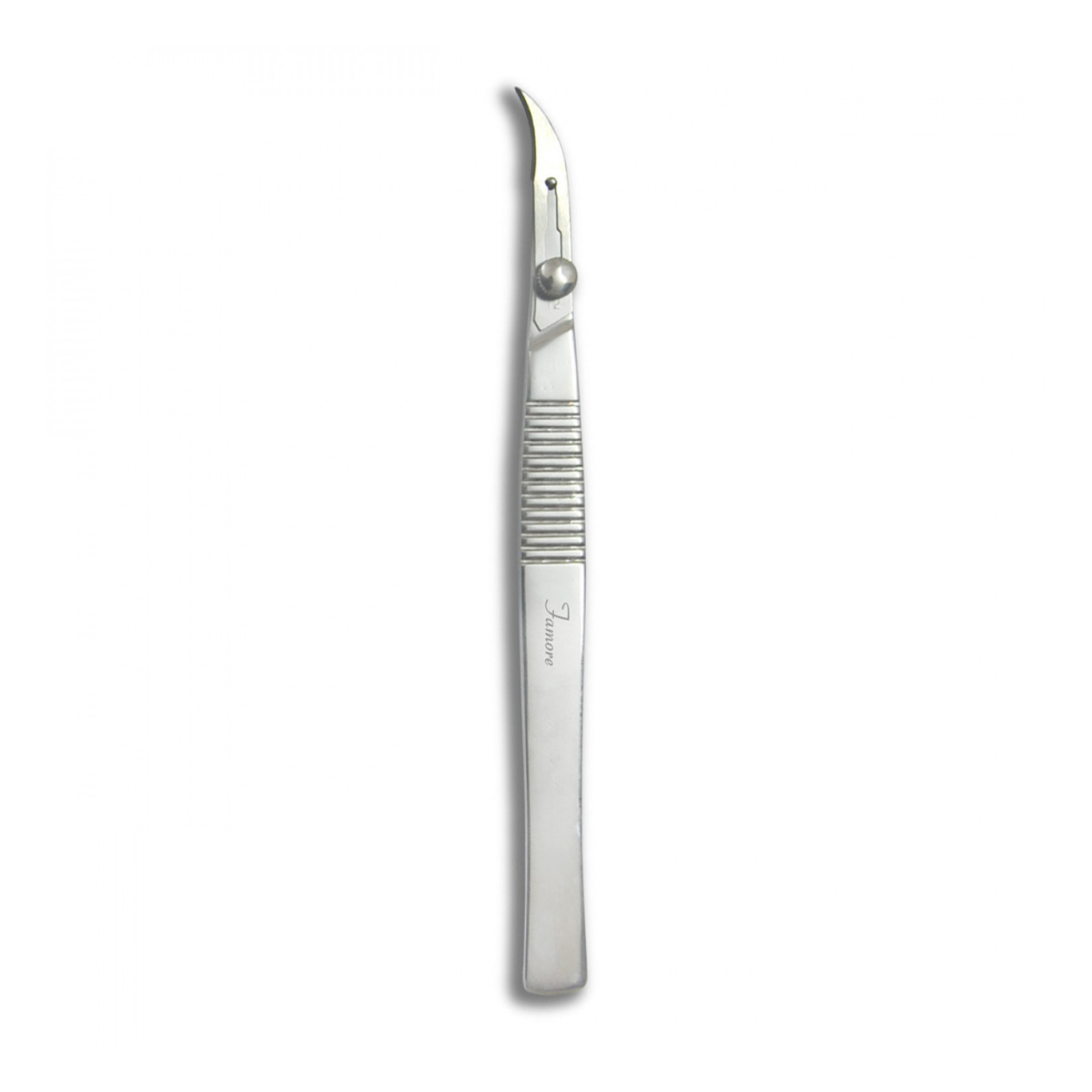
The Famore 732A is built like a surgical instrument because, in a sense, it is one. The curved blade is through-hardened steel with razor-sharp edges, and the power-lock design holds it rigid. Owners who do a lot of unpicking, professional seamstresses, alterations specialists, and serious quilters, say it glides through stitches with almost no effort and keeps its edge far longer than conventional rippers.
The killer feature is the replaceable blade system. When the blade eventually dulls, you swap in a fresh one instead of throwing away the whole tool. The kit includes the handle, two replacement blades, and a safety cap. Over years of heavy use, that makes it cheaper than replacing disposable rippers, and you never work with a dull blade because swapping takes seconds.
It is overkill for occasional use, and the price reflects the professional-grade construction. But if unpicking is a regular part of your sewing life rather than a rare annoyance, this is the last ripper you will need to buy.
Good
✓ Surgically sharp through-hardened curved blade
✓ Replaceable blades, never work with a dull edge again
✓ Power-lock design holds the blade rigid
✓ Safety cap included; built for professional use
Watch out for
✕ Higher upfront cost than conventional rippers
✕ More tool than occasional sewists need
4. Dritz 5101 Ergonomic Large Seam Ripper
Unpicking a long seam is repetitive hand work, and for sewists with arthritis, carpal tunnel, or just tired hands, handle design matters as much as blade sharpness. The Dritz 5101 is built around a large, rounded, soft-grip handle that owners with hand issues specifically praise. It fills the palm, reduces the pinch grip that causes cramping, and lets you work longer with less pain.
The blade is electronically ground for lasting sharpness and carries the standard safety ball to protect fabric. It handles seams, stitches, and buttonholes like any good ripper. The larger size also makes it easier to find in a pincushion and harder to lose in the couch, which owners mention more often than you would expect.
It is not the finest-pointed ripper on this list, so for the most delicate unpicking the Clover still wins. But as the comfortable workhorse for everyday ripping, especially for anyone whose hands complain, the 5101 is the thoughtful choice.
Good
✓ Large rounded soft-grip handle reduces hand strain
✓ Recommended by owners with arthritis and carpal tunnel
✓ Electronically ground blade with safety ball
✓ Easy to grip and hard to lose
Watch out for
✕ Larger size is less precise for very fine work
✕ Handle may feel bulky for small hands
5. Slice 10596 Safety Seam Ripper
The Slice 10596 takes a completely different approach: instead of a sharper steel blade, it uses a ceramic safety blade with a rounded tip. The blade cuts thread effectively but is finger-friendly to the touch, which makes it the pick for households with kids, classrooms, and anyone who has ever stabbed themselves reaching into a notions bag. The blade retracts manually for storage.
Slice claims the ceramic edge lasts up to 11 times longer than steel, and owners report that it does stay effective for a very long time. The ambidextrous handle is made from glass-filled nylon with a rubberized grip, and a lanyard hole lets you tether it to your sewing station. Blade changes need no tools.
The tradeoff is cutting feel. The safety edge does not have the same surgical bite as the Clover or Famore on dense or tiny stitches; it is a safe cutter, not a precision instrument. For everyday ripping where safety matters more than ultimate sharpness, that is a fair trade.
Good
✓ Finger-friendly ceramic blade with rounded tip
✓ Manual retraction for safe storage
✓ Blade lasts far longer than steel, per Slice and owners
✓ Ambidextrous handle with lanyard hole
Watch out for
✕ Less surgical precision than steel blades on fine work
✕ Higher price than conventional rippers
6. ZMAAGG 6-Piece Ergonomic Seam Ripper Set
Sometimes the right answer is quantity. The ZMAAGG set gives you six ergonomic-grip seam rippers with rubber handles, red safety balls, and protective caps, for less than the price of two premium rippers. Put one at every workstation, one in the travel kit, one in the car for retreat emergencies, and still have spares.
The quality is genuinely decent for the price. Owners report sharp blades that cut cleanly, comfortable rubber grips, and caps that actually stay on. They are not Clover-sharp and will not stay sharp as long as the Famore, but as a way to make sure you always have a ripper within reach, the set is excellent value.
This also makes a great gift for a new sewist: pair it with a pin cushion and a tape measure and you have a starter notions kit. Just know that when the blades dull, you replace the rippers rather than sharpening them.
Good
✓ Six rippers with ergonomic rubber grips and caps
✓ Excellent value, equip every workstation
✓ Sharp out of the box with safety balls
✓ Great gift or classroom set
Watch out for
✕ Blades dull faster than premium rippers
✕ Disposable rather than maintainable
How We Picked
We started from the job: cutting thread cleanly without damaging fabric. Blade sharpness out of the box was the top criterion, followed by how long that sharpness lasts, handle comfort during extended use, and the effectiveness of the safety ball.
We read through owner reviews on Amazon and sewing forums, looking for reports of fabric damage (the unforgivable sin), dulling over time, and handle comfort during big unpicking jobs. Replaceable-blade and safety designs earned their places by solving real problems: ongoing cost and finger safety. We did not lab-test sharpness; scores reflect aggregated owner satisfaction and design quality for real sewing work.
FAQs
How do you use a seam ripper without damaging fabric?
Slide the long pointed tine under a stitch, let the thread slip down to the blade, and push gently so the blade cuts the thread. Keep the safety ball against the fabric and work in good light. Never force it: if the blade is not cutting easily, it is dull and needs replacing.
Why does my seam ripper tear the fabric instead of cutting thread?
Almost always a dull blade. A sharp ripper cuts thread with light pressure; a dull one requires force, and force is what tears fabric. Cheap rippers often arrive dull. Replace the ripper or, with the Famore, swap the blade.
What is the red ball on a seam ripper for?
It is a safety ball that slides along the fabric surface while the blade cuts the thread above it. It keeps the sharp point from digging into and cutting your fabric. Always keep the ball side toward the fabric.
Can you sharpen a seam ripper?
In theory, with a very fine file, but in practice the blades are too small and the geometry too precise. Most sewists treat rippers as replaceable, which is why the Famore’s replaceable-blade system is so appealing for heavy users.
Seam ripper vs. thread snips: which should I use?
Use a seam ripper for removing sewn stitches and opening buttonholes, where the fork design slides under threads. Use thread snips for trimming thread tails and cutting threads at the machine. They are complementary tools, not substitutes.
How long should a seam ripper last?
A quality ripper like the Clover lasts years of regular home use before dulling. Heavy daily use shortens that to months. When it starts requiring pressure instead of gliding, replace it: a dull ripper costs more in ruined fabric than a new one costs to buy.