
As an Amazon Associate I earn from qualifying purchases.
Pressing is half of quilting. Every seam you press flat is a seam that will piece accurately, and every wobbly, narrow board makes that job harder than it needs to be. A standard 15-inch-wide ironing board forces you to constantly reposition quilt blocks, and a flimsy frame that rocks under a heavy steam iron is genuinely dangerous.
Quilters need three things from a board: width, stability, and padding. Width means you can press a full block or a folded quilt section without shifting it around. Stability means the board does not walk across the floor when you lean into a seam. Thick padding means your seams press crisp instead of sinking into a thin cover.
We compared the boards quilters recommend most, weighing ironing surface size, frame sturdiness, cover and pad quality, and height adjustability. Prices move around on Amazon, so treat the ranges as ballparks.
TL;DR: The Brabantia Size C (~$130-160) is the best ironing board for most quilters: a generous 49 x 18-inch surface, a rock-solid four-leg frame, and a 10-year guarantee. Budget shoppers should grab the Bartnelli Extra Wide Pro (~$70-100) for a 19-inch-wide surface at half the price. Serious quilters with the space and budget will love the Reliable 320LB (~$280-350), which converts into a 55-inch pressing table.
At a Glance, Our Scores
| Pick | Best for | Our score | Typical price | Buy |
|---|---|---|---|---|
| Brabantia Size C Ironing Board | Best overall | 9.5/10, huge stable surface, premium cover, 10-year guarantee | ~$130-160 | Check Price on Amazon |
| Bartnelli Extra Wide Pro 19×48 | Best value | 8.9/10, 19-inch width and 4-layer cover for half the price of premium boards | ~$70-100 | Check Price on Amazon |
| Bartnelli Pro Luxury 51×19 | Widest surface | 8.7/10, 51 inches of aluminum-framed pressing space | ~$120-160 | Check Price on Amazon |
| Reliable 320LB 2-in-1 | Premium quilter’s pick | 9.2/10, converts to a 55-inch longboard built for quilters | ~$280-350 | Check Price on Amazon |
| Ezy Iron Tabletop Board | Best tabletop | 8.3/10, compact pressing station for small spaces | ~$35-50 | Check Price on Amazon |
Prices move constantly on Amazon, every “Check Price on Amazon” link below takes you to the live listing.
Quick Picks
- Best overall: Brabantia Size C (~$130-160). The gold standard: wide, stable, and guaranteed for a decade.
- Best value: Bartnelli Extra Wide Pro (~$70-100). Nearly as wide for much less money.
- Premium pick: Reliable 320LB (~$280-350). A 2-in-1 board that becomes a 55-inch quilting surface.
- Small spaces: Ezy Iron tabletop (~$35-50). Presses quilt blocks on any table.
1. Brabantia Size C Ironing Board
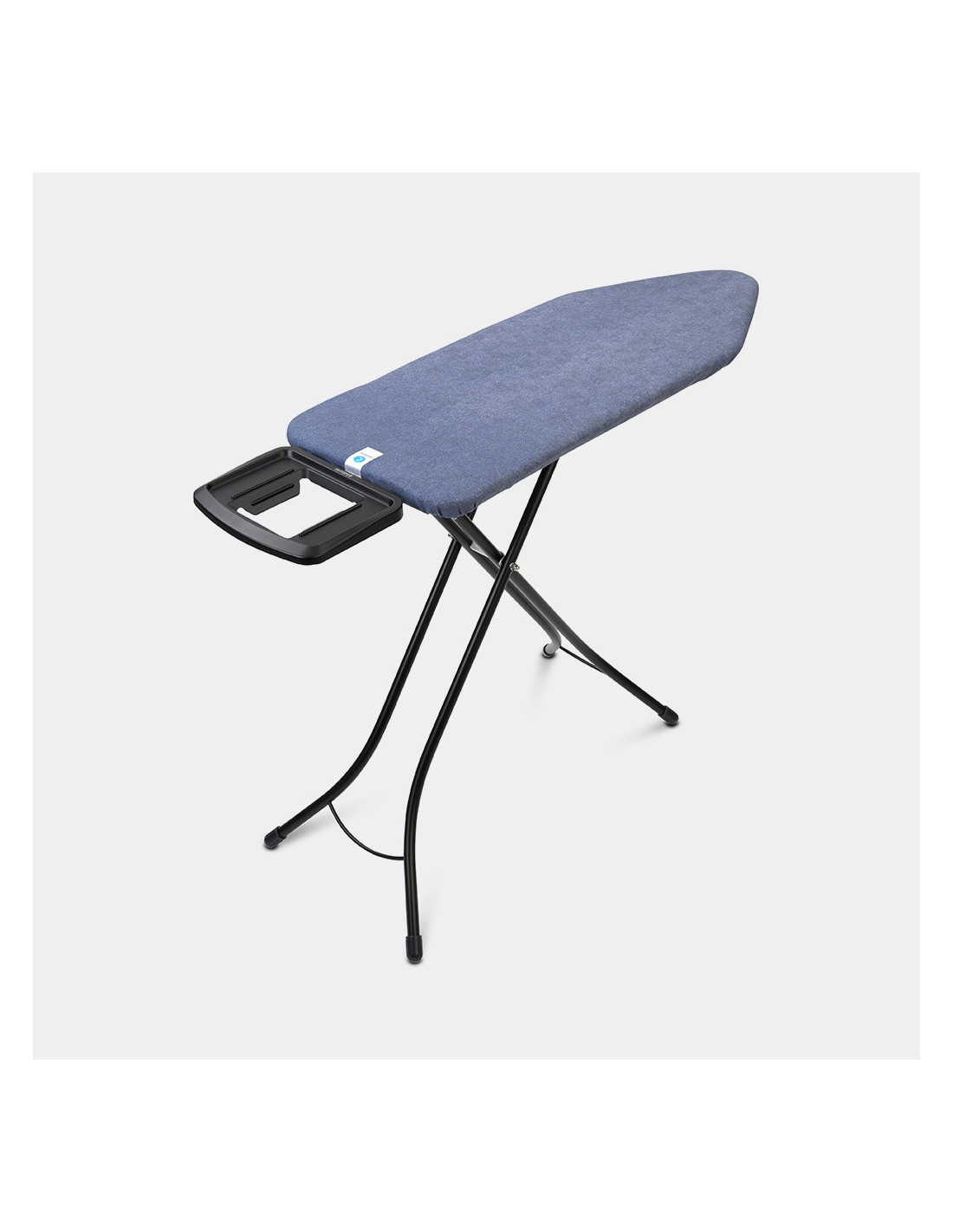
Brabantia boards are the ones quilt shop owners buy for their classrooms, which tells you most of what you need to know. The Size C gives you 49 x 18 inches of pressing surface, enough to press a full 12-inch block with room to spare, and the solid four-legged steel frame is the most stable in its class. Owners report that it simply does not wobble, even when pressing with a heavy steam generator iron parked in the XL holder at the wide end.
The details are where the price goes. The 100% cotton cover has a resilient foam layer and Brabantia’s “perfect fit” stretch system, so it stays taut and smooth instead of developing the lumps that telegraph into your seams. Seven height positions adjust from about 27 to 38 inches, which lets taller quilters press without hunching. A child lock prevents accidental collapse, and the whole thing folds for storage.
The 10-year guarantee is the clincher. Ironing boards take abuse: heat, steam, weight, daily folding. Brabantia backs this one for a decade, and owner reviews suggest they honor it. If you press daily, this board costs pennies per use over its life.
Good
✓ 49 x 18-inch surface handles full quilt blocks easily
✓ Four-leg steel frame is exceptionally stable under heavy irons
✓ Thick cotton cover with foam layer stays smooth and taut
✓ 10-year guarantee, the best in the business
Watch out for
✕ Heavier than budget boards at around 15 pounds
✕ Premium price, though the guarantee softens the math
2. Bartnelli Extra Wide Pro 19×48 Ironing Board

The Bartnelli Extra Wide Pro is the board for quilters who want Brabantia-like width without the Brabantia price. Its 19 x 48-inch surface is actually wider than the Brabantia Size C, and the 4-layer heat-resistant cover with foam padding gives you a smooth, scorch-resistant pressing surface that owners say produces crisp seams. A built-in iron rest with cord holder and a storage shelf underneath add convenience the premium boards charge extra for.
Stability is good for the price: a heavy-duty metal frame with non-slip feet keeps the board planted during normal pressing. It will not match the Brabantia’s four-leg solidity under a very heavy steam generator, but for standard steam irons it holds steady. Owners consistently praise how much board you get for the money, and it ranks well among Amazon’s best-selling ironing boards.
The main compromise is longevity. The cover and padding are good but not Brabantia-grade, and the frame finish may show wear sooner with daily use. For the price, though, you could replace this board twice and still spend less than one premium board.
Good
✓ 19-inch width beats many premium boards for less money
✓ 4-layer heat-resistant cover with thick foam padding
✓ Iron rest, cord holder, and storage shelf included
✓ Folds flat for storage
Watch out for
✕ Not quite as rock-solid as the Brabantia under heavy steam irons
✕ Cover quality is good, not great, over years of daily use
3. Bartnelli Pro Luxury 51×19 Ironing Board
If width is your religion, the Bartnelli Pro Luxury gives you 51 x 19 inches of surface, the largest on this list short of the Reliable’s extended mode. That extra length matters when you are pressing long borders, sashing strips, or folded yardage: fewer repositionings, straighter results. The ultra-premium aluminum build keeps the weight reasonable despite the size, and owners say it feels more refined than the standard Bartnelli.
The 4-layer cover is the same thick, heat-resistant system as the Extra Wide Pro, and the wide-leg design provides the stability a board this size needs. Adjustable height covers the usual range, and it folds for storage, though at 51 inches long you will want a decent-sized closet or a spot behind a door.
This board sits in an interesting middle ground: more surface than the Brabantia, less money than the Reliable, but without the Brabantia’s guarantee or the Reliable’s quilting-specific features. It is the right call for quilters whose main frustration is simply running out of board.
Good
✓ 51 x 19-inch surface, the widest standard board here
✓ Lightweight aluminum frame for its size
✓ Thick 4-layer heat-resistant cover
✓ Good stability from wide-set legs
Watch out for
✕ Long when folded, needs real storage space
✕ No quilting-specific features like the Reliable’s extension
4. Reliable 320LB 2-in-1 Pressing Table

The Reliable 320LB is the only board on this list designed specifically with quilters in mind. In standard mode it is a superb ironing board with a heavy-duty tube frame. Slide on the included extension and it becomes a 55-inch longboard: a huge, uninterrupted pressing surface that handles full quilt tops, long borders, and big pieces of yardage without the constant shuffling that narrower boards demand.
Build quality is a clear step above everything else here. The tube-frame construction is genuinely rigid, the double wishbone legs do not move or wobble, and the Vera Foam cover includes a heat-resistant zone rated past 400 degrees, so you can rest your iron directly on the board. Owners who quilt daily call it the last ironing board they expect to buy, and the made-in-Italy construction shows in the fit and finish.
The price and the footprint are the honest tradeoffs. This is a premium purchase, and even folded it is a substantial piece of equipment. But if pressing is central to your quilting and you have the space, nothing else on this list gives you 55 inches of stable pressing surface.
Good
✓ 55-inch extended surface, made for pressing quilt tops
✓ Tube-frame construction is the most rigid here
✓ Heat-resistant cover zone handles iron rest directly
✓ Ergonomic iron rest reduces wrist strain
Watch out for
✕ Premium price, several times the budget picks
✕ Large footprint, needs dedicated space
5. Ezy Iron Tabletop Ironing Board
Not every quilter has room for a full-size board. The Ezy Iron is a tabletop board, about 24 x 14 inches, that turns any table into a pressing station. For pressing blocks, small piecing, and applique, that is genuinely all the surface you need, and the thick 400gsm padding with a heat-reflective cover gives you a firm, effective press. Owners report that the reflective cover really does seem to press from both sides at once, cutting pressing time.
The folding steel legs have non-slip feet, so it sits steady on a table, and it folds flat for storage in seconds. It comes with a silicone iron rest and even a pack of laundry wash bags, which is a nice touch. This is also the board to buy for retreats and classes: it travels easily and sets up anywhere.
Be honest about the limits. You will not press a quilt top on 24 inches of board, and the narrow surface means repositioning larger pieces. Pair it with a wool pressing mat for the best small-space setup, and keep a full-size board in mind if your quilting grows.
Good
✓ Compact 24 x 14-inch surface ideal for blocks and piecing
✓ Thick padding with heat-reflective cover presses efficiently
✓ Folds flat, perfect for retreats, classes, and small rooms
✓ Iron rest and wash bags included
Watch out for
✕ Too small for quilt tops or long borders
✕ Narrow surface means more repositioning on bigger pieces
How We Picked
We started from what quilting actually demands: a wide surface for blocks, a frame that does not wobble under a hot iron, and padding thick enough to press seams crisp. Boards narrower than 18 inches were excluded, as were flimsy X-frame boards that owners report walking across the floor.
We compared owner reviews across Amazon and quilting retailers, looking specifically for feedback from quilters rather than general laundry users. We weighted surface dimensions and reported stability most heavily, then cover and pad quality, then height adjustability and storage. Warranty length served as a tiebreaker, which helped the Brabantia. We did not press-test these boards ourselves; scores reflect aggregated owner satisfaction and how well each board’s design matches quilting work.
FAQs
What size ironing board is best for quilting?
Wider is better. Look for at least 18 inches of width and 48 inches of length. The extra width means you can press a full quilt block without repositioning it, which keeps your piecing accurate and your pressing faster.
Is a tabletop ironing board enough for quilting?
For piecing blocks and small projects, yes. A tabletop board plus a wool pressing mat is a legitimate small-space setup. For pressing quilt tops, borders, or yardage, you will want a full-size board.
Why does my ironing board wobble, and how do I fix it?
Wobble usually comes from a lightweight X-frame, uneven leg caps, or a loose pivot bolt. Tightening the bolt and checking the floor caps helps, but a fundamentally flimsy board will always flex. The four-leg and tube-frame designs on this list are the real fix.
Cotton or heat-reflective cover: which is better?
Cotton covers with thick padding, like Brabantia’s, give the smoothest, most traditional press and last longer. Heat-reflective metallic covers bounce heat back and can speed up pressing, but they tend to wear faster. For daily quilting, thick cotton over dense padding wins.
Can I use a regular ironing board for quilting?
You can, but standard boards are narrow and lightly padded, which makes pressing blocks tedious and seams less crisp. A wide board with thick padding is one of the highest-value upgrades a quilter can make.
How do I keep my ironing board cover smooth?
Pull the cover taut and use the cord or stretch system underneath to tension it, re-tensioning every few months as it relaxes. Replace the cover when the padding underneath compresses flat: a compressed pad is the main reason seams stop pressing crisp.