
As an Amazon Associate I earn from qualifying purchases.
The bobbin is the most underestimated part of your sewing machine. It is a tiny spool that sits under the needle plate, holding the bottom thread. Every stitch you sew is a handshake between the top thread and the bobbin thread, and when that handshake goes wrong, you get the classic symptoms: looping underneath, bird-nesting, and tension you cannot dial in no matter how many knobs you turn.
A shocking number of those problems come from one cause: the wrong bobbin. Not a broken machine, not bad tension. Just a bobbin that is slightly too tall, slightly too narrow, or made of the wrong material for your machine. This guide will make sure that never happens to you.
TL;DR: Use the exact bobbin class your manual specifies. Class 15 is the most common for home machines; Class 66, L, and M serve specific machine types. Use plastic bobbins if your machine shipped with plastic (many computerized machines need plastic for their sensors). Keep 10-15 wound spares on hand. Never substitute a “close enough” bobbin.
What a Bobbin Does
Every lockstitch your machine makes needs two threads: the top thread from the spool, and the bottom thread from the bobbin. The bobbin sits in the bobbin case or bobbin housing below the needle plate. As the needle dips down, a hook mechanism catches the top thread and loops it around the bobbin thread, locking the two together in the fabric.
Because the bobbin is small, it runs out. A lot. A full bobbin holds roughly 20-60 yards of thread depending on the class, which sounds like plenty until you are topstitching a quilt. Running out mid-seam is normal, which is why experienced sewists wind several bobbins before starting a big project.
The Main Bobbin Classes: A Compatibility Table
Bobbin classes are about dimensions: diameter, height, and hole size. They are not interchangeable. A bobbin that is a fraction of a millimeter too tall will drag, bind, or throw off tension.
| Class | Also called | Typical machines | Notes |
|---|---|---|---|
| 15 | Style A, SA156 | Most Brother, Singer, Babylock, Janome, Juki home machines | The most common home bobbin; flat sides |
| 15J | none | Some Singer Futura and computerized models | Slightly taller than 15; do NOT substitute for 15 |
| 66 | none | Many Singer and some Janome drop-in models | Curved sides; for specific drop-in housings |
| L | none | Longarm and some industrial machines | Larger capacity for big projects |
| M | none | Industrial and longarm machines | Largest common class; not for home machines |
The golden rule: check your manual and buy that exact class. Class 15 and 15J look nearly identical, but 15J is slightly taller, and that tiny difference is enough to cause tension chaos in a machine built for 15. “Close enough” is the most expensive phrase in sewing.
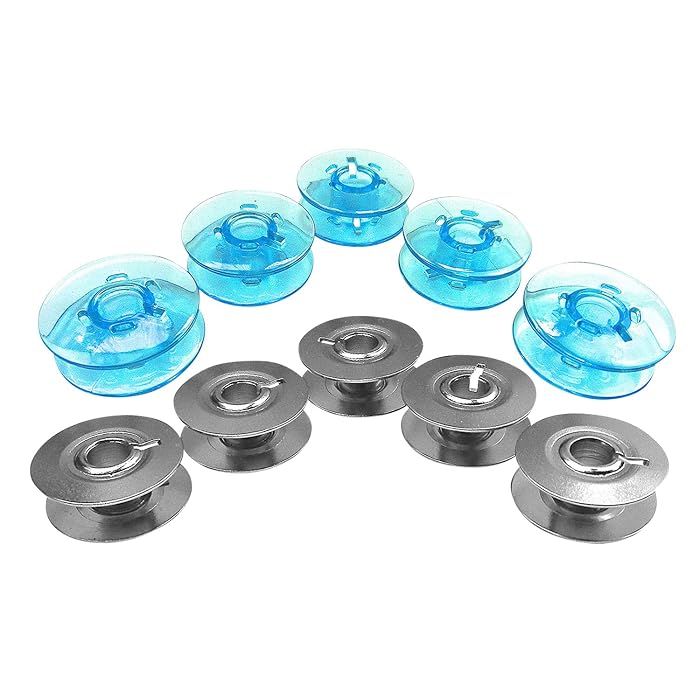
Metal vs Plastic: Use What Your Machine Shipped With
This is the second most common bobbin mistake. Metal and plastic bobbins are not simply two versions of the same thing.
Plastic bobbins are standard in most modern computerized machines. They are lightweight, inexpensive, and transparent, so you can see how much thread is left. Critically, many computerized machines use sensors that detect the bobbin, and those sensors are calibrated for plastic. A metal bobbin in such a machine can confuse the sensor or, worse, damage it.
Metal bobbins are the traditional choice for mechanical machines and front-loading (oscillating hook) designs. They are more durable, hold their shape forever, and run beautifully in machines designed for them. Vintage Singers and most mechanical workhorses expect metal.
The rule is simple and non-negotiable: use the material your machine came with. If it shipped with plastic bobbins, buy plastic. If it shipped with metal, buy metal. Switching materials to save a few dollars is a false economy that can cost you a service visit.

Why the Wrong Bobbin Ruins Tension
Tension problems blamed on the machine are often bobbin problems in disguise. Here is why a wrong bobbin wreaks havoc:
Height differences change how the thread feeds off the bobbin. Too tall and the bobbin drags against the housing; too short and it rattles, feeding thread unevenly. Both show up as inconsistent stitch quality you cannot fix with the tension dial.
Diameter differences change the bobbin’s spin speed and how it seats in the case. A loose bobbin chatters. A tight one binds. Either way, the bottom thread delivery becomes erratic.
Material differences change weight and friction. A metal bobbin where plastic belongs spins differently and can trip sensors. A cheap plastic bobbin with rough edges or molding flash can snag thread every single revolution.
If your tension was fine yesterday and terrible today, and you recently bought bargain bobbins, swap one original bobbin back in and test. Forums are full of sewists who solved a “broken machine” this way.
Pre-Wound vs Self-Wound Bobbins
Self-wound bobbins are the default: you wind thread from your spool onto an empty bobbin using the machine’s bobbin winder. The advantage is a perfect color match with your top thread, since it is the same thread. The disadvantage is time, especially when you need ten bobbins for a quilt.
Pre-wound bobbins come filled with thread, usually in white, black, or a color assortment. They hold more thread than a home-wound bobbin because they are wound under industrial tension, and they are a huge time saver for embroidery and quilting. The trade-off is that the thread is typically a finer bobbin-weight thread, and color matching is limited to what you buy.
For garment sewing, self-winding wins on color match. For embroidery and long quilting runs, pre-wounds are the professional’s shortcut. Many serious sewists keep both.
How Many Spares to Keep
Wind more bobbins than you think you need. A practical stash:
- Casual sewist: 5-8 bobbins in your most-used colors (white, black, gray, plus project colors)
- Quilter: 10-15 bobbins, mostly white or cream, wound before starting a quilt
- Embroiderer: 15-20 pre-wound bobbins, since embroidery eats bobbin thread fast
Store them so they do not unwind: a bobbin box with individual slots, or silicone bobbin holders that clamp the thread tail. A drawer of loose bobbins becomes a tangled nest within a week.
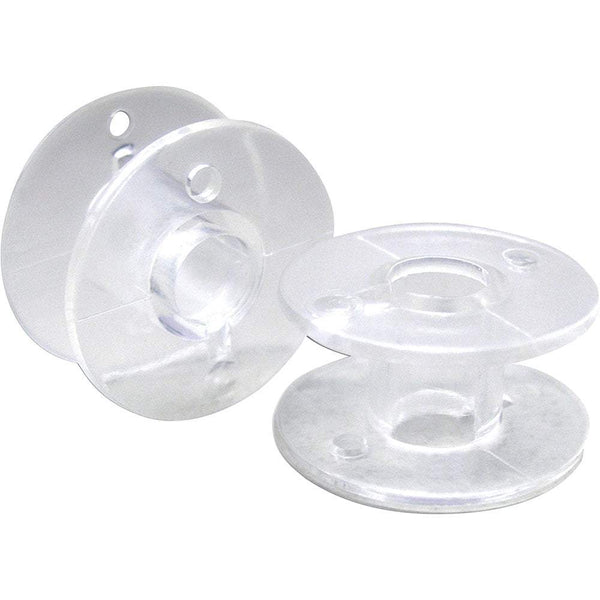
Two Packs Worth Buying
If your machine takes Class 15 bobbins, these are solid, well-reviewed multipacks. Confirm your machine’s class in the manual first.
Plastic Class 15 (25-pack with case). Transparent plastic bobbins in the standard Class 15 size, with a storage box that keeps them organized. The right choice for computerized machines that shipped with plastic bobbins. Runs ~$7-9.
Metal Class 15 (28-pack with box). Polished steel bobbins in standard Class 15 dimensions, with a storage box. The right choice for mechanical and front-loading machines that shipped with metal bobbins. Runs ~$7-10.
Frequently Asked Questions
Can I use Class 15 bobbins in a machine that takes Class 66?
No. They have different dimensions and different side profiles. Using the wrong class causes tension problems and can damage the bobbin housing. Always match the manual.
Are generic bobbins as good as brand-name ones?
Usually, yes, if the dimensions are correct. Bobbins are simple parts. The failures come from wrong dimensions or rough molding, not from the lack of a brand name. Buy from listings with strong reviews and check a caliper measurement if you are picky.
Why does my bobbin thread keep tangling underneath?
The usual suspects, in order: the bobbin is inserted backwards (check the manual’s thread direction diagram), the bobbin is the wrong class, the bobbin case has lint packed under the tension spring, or the top thread is not seated in the take-up lever. Rethread the top completely before blaming the bobbin.
How do I know when the bobbin is running out?
Transparent plastic bobbins let you see the thread level. Many computerized machines also have a bobbin-low sensor. Otherwise, you develop a sixth sense, usually right after running out mid-buttonhole twice.
Can I reuse a partially wound bobbin?
Yes, but wind it full before using it for an important seam. A half-full bobbin feeds slightly differently than a full one, and switching mid-seam can show a visible tension change.