
As an Amazon Associate I earn from qualifying purchases.
Upholstery sewing is a different sport from garment sewing. Nobody cares about your buttonholes when you are re-covering a sofa cushion. What matters is whether the machine can punch through six layers of canvas and welt cord without the motor groaning, whether the presser foot will climb over a fat seam without stalling, and whether the stitches stay even when the fabric stack gets thick.
There is also an honesty problem in this category. Plenty of home machines are marketed as “heavy duty,” and some of them genuinely handle home-decor weight fabrics: cushion covers, curtains, slipcovers, outdoor pillow covers. But true upholstery work, the kind involving leather, vinyl, and multi-layer marine canvas, belongs to walking-foot industrial machines, and no home machine replaces those. This list is organized around that reality, from capable home machines up to the industrial options.
One rule before the picks: for anything thicker than standard home-decor fabric, switch to a walking foot, a jeans or heavy-duty needle (size 16 or 18), and polyester upholstery thread. The right machine with the wrong needle will still give you skipped stitches and broken thread.
TL;DR: For home-decor upholstery (cushions, curtains, slipcovers), the Singer Heavy Duty 4452 (~$180-220) is the value king with a walking foot in the box. The Janome HD3000 (~$350-450) is the sturdier mechanical alternative. For real upholstery volume or thick materials, step up to the portable walking-foot Sailrite Ultrafeed LSZ-1 (dealer direct, ~$1,300-1,600) or a full industrial like the Juki DDL-8700 (~$750-900).
At a Glance, Our Scores
| Pick | Best for | Our score | Typical price | Buy |
|---|---|---|---|---|
| Singer Heavy Duty 4452 | Best overall for home upholstery | 9.2/10, walking foot included and a motor that punches above its price | ~$180-220 | Check Price on Amazon |
| Janome HD3000 | Best sturdy mechanical | 8.9/10, aluminum frame and adjustable foot pressure that inspire confidence | ~$350-450 | Check Price on Amazon |
| Brother ST371HD | Best budget thick-fabric pick | 8.4/10, metal needle plate and honest power under $200 | ~$150-180 | Check Price on Amazon |
| Janome HD5000 | Best step-up mechanical | 8.7/10, heavier aluminum body for frequent decor projects | ~$450-550 | Check Price on Amazon |
| Juki DDL-8700 | Best industrial for volume | 8.8/10, 5,500 spm flatbed for serious home-decor output | ~$750-900 | Check Price on Amazon |
| Sailrite Ultrafeed LSZ-1 | Best portable walking-foot | 9.0/10, the real-deal walking foot in a portable package | ~$1,300-1,600 | Dealer direct only |
Prices move constantly on Amazon, every “Check Price on Amazon” link below takes you to the live listing.
Quick Picks
- Best overall: Singer Heavy Duty 4452 (~$180-220).
- Best mechanical: Janome HD3000 (~$350-450).
- Best budget: Brother ST371HD (~$150-180).
- For real upholstery: Sailrite Ultrafeed LSZ-1 (dealer direct).
1. Singer Heavy Duty 4452
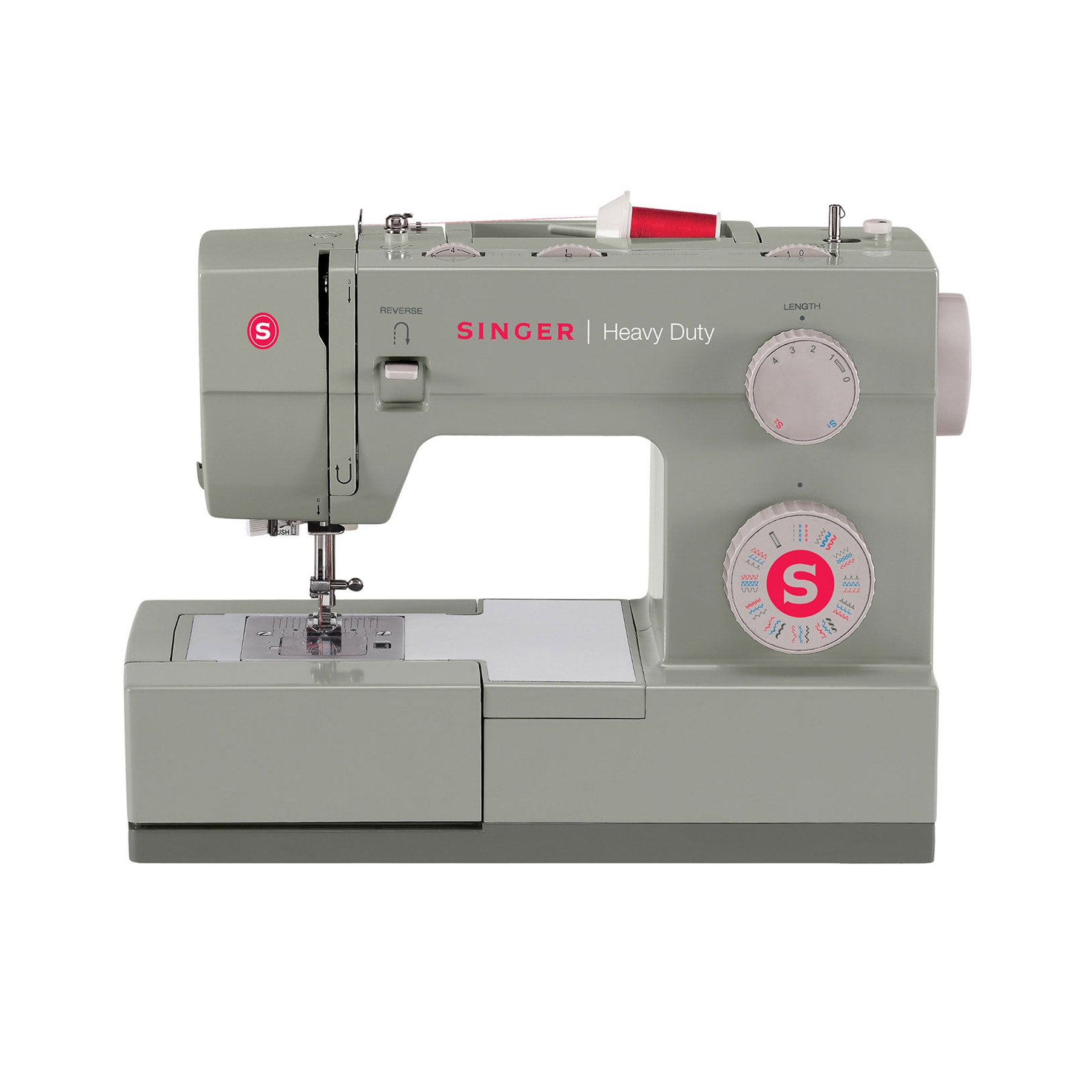
The 4452 is the top of Singer’s mechanical Heavy Duty line, and for home-decor sewing it is the machine we recommend first. The formula is simple: a full metal frame, a motor Singer rates at 60 percent stronger than standard machines, 1,100 stitches per minute, and 110 stitch applications covering the basics plus stretch and decorative options. For cushions, curtains, slipcovers, and outdoor pillows, that is plenty.
The detail that seals it for upholstery-flavored work: the box includes an even-feed walking foot and a non-stick foot alongside the usual four. A walking foot is close to mandatory for layered home-decor fabrics, and buying one separately costs $20 to $40, so having it included is real value. Owners report it sews through multiple layers of canvas and denim without drama, and the stainless steel bedplate helps thick stacks slide instead of drag.
It is not perfect. The 4452 is still a home machine: it will not sew leather all day, and sustained thick work will eventually find its limits. Some owners note the machine is loud at full speed and the included accessory quality is fine rather than luxurious. But for the price, nothing else gives you this combination of power, included feet, and parts availability.
Good
✓ Walking foot and non-stick foot included, the right feet for the job
✓ Strong motor handles canvas, denim, and layered home-decor fabrics
✓ Full metal frame keeps stitches consistent under load
✓ 1,100 spm with a one-step buttonhole for cushion covers
Watch out for
✕ Still a home machine, not a substitute for a walking-foot industrial
✕ Loud at top speed
✕ Sustained leather or vinyl work will push past its limits
2. Janome HD3000

The HD3000 is the machine for people who distrust marketing and want mechanical simplicity done well. It is a straightforward mechanical machine with 18 stitches, a heavy-duty aluminum internal frame, and adjustable presser foot pressure, which is one of the most underrated features for thick fabrics. Being able to back off the pressure on bulky seams (or crank it up on slippery vinyl) makes a bigger difference than any stitch count.
Janome’s mechanical machines have a reputation for longevity, and owners report the HD3000 sews smoothly and quietly with a planted feel that cheaper machines lack. The top-loading jam-proof bobbin is genuinely convenient, the built-in needle threader works, and a hard cover comes standard. The instructional stitch chart inside the top tray is a small touch that beginners appreciate.
For upholstery specifically, the HD3000’s strengths are its frame rigidity and pressure control. Its weakness relative to the Singer 4452 is value: it costs roughly twice as much while offering fewer stitches and no walking foot in the box (you will want to add one). Choose the Janome if you value build quality and quiet operation over maximum features per dollar, and plan to buy the walking foot separately.
Good
✓ Adjustable presser foot pressure, excellent for thick and bulky seams
✓ Aluminum internal frame, smooth and quiet operation
✓ Janome mechanical reliability reputation
✓ Hard cover and clear stitch reference included
Watch out for
✕ No walking foot in the box, budget for one separately
✕ 18 stitches is sparse next to the Singer’s 110 applications
✕ Costs roughly double the 4452
3. Brother ST371HD

Brother’s Strong and Tough line is the budget answer to heavy home sewing, and the ST371HD is the sweet spot of the range. You get 37 stitches, a metal needle plate, a heavy-duty needle set in the box, six feet, and a machine that owners consistently describe as surprisingly capable on jeans, canvas, and layered home-decor fabric. It will not out-muscle the Singer 4452, but it costs less and handles the same class of projects.
The honest framing: this is a reinforced home machine, not a semi-industrial one. The “heavy duty” here means a metal needle plate, a stronger motor than Brother’s cheapest models, and gearing that tolerates thick seams. For curtains, cushion covers, tote bags, and repairs, that is enough. For reupholstering a whole sofa in marine vinyl, you need the Sailrite below.
Where the ST371HD wins is as a second machine or a gift. It is inexpensive enough to keep as the designated “thick stuff” machine while your main machine stays set up for garment work, and simple enough that a beginner can run it. Just pair it with proper heavy-duty needles; the stock universal needle will not do the machine justice on canvas.
Good
✓ Genuine thick-fabric capability under $200
✓ Metal needle plate and heavy-duty needles included
✓ Simple mechanical operation, beginner friendly
✓ Great as a dedicated second machine for heavy projects
Watch out for
✕ Less power than the Singer 4452
✕ 37 stitches, no walking foot included
✕ Not built for sustained upholstery-shop workloads
4. Janome HD5000

The HD5000 is the HD3000’s bigger sibling: same mechanical philosophy, but with a full heavy-duty aluminum body rather than just an internal frame, and a bit more heft everywhere it counts. If you sew home-decor projects weekly rather than occasionally, the step up in rigidity is worth the premium.
In practice, owners describe the HD5000 as the machine that ends the “is my machine strong enough” anxiety. Eighteen stitches including a four-step buttonhole, top-loading full rotary hook bobbin, built-in needle threader, and a hard cover standard. It is the kind of machine you buy once and hand down. For slipcovers, drapery, and cushion work, the aluminum body keeps everything aligned when the fabric stack gets thick, which is exactly when cheaper machines start producing uneven stitches.
The price is the obvious objection: at roughly two to three times the Singer 4452, you are paying for longevity and feel rather than features. This is a buy-it-for-decades machine for someone who sews heavy home projects regularly, not the value pick for occasional cushion covers.
Good
✓ Full aluminum body, a meaningful step up in rigidity
✓ Built for decades of heavy home use
✓ Top-loading rotary hook bobbin, smooth and reliable
✓ Confident on thick layered seams
Watch out for
✕ Premium price for 18 mechanical stitches
✕ No walking foot included
✕ Heavier than the HD3000, less portable
5. Juki DDL-8700

Now we leave home machines behind. The DDL-8700 is a genuine industrial single-needle lockstitch machine, the kind that lives in alterations shops and small factories. It sews up to 5,500 stitches per minute, comes as a complete unit with table, servo motor, and stand, and will sew home-decor fabrics all day without breaking a sweat. If you are starting a small curtain or cushion business, this is the price-to-performance king of industrial machines.
The honest caveats matter more here than anywhere else on this list. First, it is industrial equipment: it arrives as a large table unit, it weighs over 100 pounds assembled, and it needs dedicated floor space. Second, the standard DDL-8700 is a flatbed lockstitch, not a walking-foot machine, and Juki rates it for light to medium fabrics. It will fly through curtain panels, cushion covers, and drapery yardage, but it is not the machine for thick leather upholstery; that job belongs to a walking-foot industrial (or the Sailrite below). Third, assembly and setup take real effort.
For volume home-decor sewing, though, nothing in the home-machine world touches it. Owners report decades-long lifespans with basic maintenance, and the servo motor keeps it quiet enough for home use.
Good
✓ True industrial speed and durability for production-level output
✓ Complete table, stand, and servo motor packages available
✓ Legendary longevity with basic oiling and maintenance
✓ Servo motor is quiet enough for a home workshop
Watch out for
✕ Needs permanent floor space, weighs 100+ pounds assembled
✕ Flatbed lockstitch, not a walking foot, rated light to medium fabrics
✕ Assembly and industrial setup learning curve
6. Sailrite Ultrafeed LSZ-1

This is the machine the home machines are pretending to be. The Ultrafeed LSZ-1 is a portable walking-foot sewing machine built specifically for heavy materials: canvas, sailcloth, leather, vinyl, webbing. The walking foot moves the top and bottom layers together, which is the entire secret to professional upholstery seams, and the LSZ-1 adds zigzag so it can handle sail and canvas work too.
Sailrite sells direct rather than through Amazon, so there is no Amazon button here: buy it from Sailrite or an authorized dealer. What you get for the premium price is a machine that owners report sewing through eight-plus layers of canvas without complaint, backed by Sailrite’s famously thorough support and parts availability. It is portable enough to take to a boat or a job site, which is exactly what it was designed for.
Who should buy it? Anyone doing real upholstery: boat cushions, automotive interiors, outdoor furniture, leather goods, or canvas work. If your ambitions stop at throw pillows and curtains, the Singer 4452 is the sane choice and this machine is overkill. But if you have ever broken a home machine on a project, the LSZ-1 is the permanent fix.
Good
✓ Genuine walking foot, the defining feature for real upholstery
✓ Sews canvas, leather, and vinyl that destroy home machines
✓ Portable, take it to the boat or the job site
✓ Excellent manufacturer support and parts availability
Watch out for
✕ Premium price, roughly 6x a home heavy-duty machine
✕ Sold direct, no Amazon listing
✕ Overkill for light home-decor projects
The Ultrafeed LSZ-1 is sold through Sailrite and authorized dealers, not Amazon, so shop it direct.
How We Picked
We separated home-decor sewing from true upholstery and ranked accordingly. For the home machines, we weighted motor strength under load, frame rigidity (metal frames only at the top), included presser feet (a walking foot in the box is a major plus), and owner reports of performance on canvas, denim, and layered home-decor fabrics. We excluded machines with a pattern of complaints about stalling on thick seams or short lifespans under heavy use. For the industrial and walking-foot picks, we relied on the professional consensus: the DDL-8700’s decades-long reputation in alterations and home-decor shops, and the Sailrite’s purpose-built walking-foot design for canvas and leather. No home machine on this list is presented as a substitute for a walking-foot industrial on genuinely heavy materials.
FAQs
Can a regular home sewing machine do upholstery?
Light upholstery, yes: cushion covers, slipcovers, and curtains in home-decor fabric are well within a strong home machine’s ability with a walking foot and heavy-duty needles. True upholstery in leather, vinyl, or multi-layer canvas needs a walking-foot machine like the Sailrite.
Do I need a walking foot for upholstery?
For anything beyond single-layer home-decor fabric, yes. A walking foot feeds thick, sticky, or layered materials evenly where a standard foot would push the top layer out of alignment. The Singer 4452 includes one; for the Janomes, buy it separately.
What needle and thread should I use?
Use jeans or heavy-duty needles in size 16 or 18, and polyester upholstery thread rather than all-purpose thread. All-purpose thread can snap under upholstery stress; upholstery thread is built for it. Change the needle often; thick fabrics dull needles fast.
What is the difference between the Singer 4452 and 4423 for upholstery?
The 4452 is the higher model: 110 stitch applications versus 97, and it includes the walking foot and non-stick foot that the 4423 lacks. For upholstery-flavored work, the included feet make the 4452 worth the small premium.
Is the Juki DDL-8700 good for leather upholstery?
Not ideally. It is a flatbed lockstitch rated for light to medium fabrics, and it lacks a walking foot. It excels at high-volume curtain, cushion, and drapery work. For leather, a walking-foot machine (Sailrite LSZ-1 or a walking-foot industrial) is the correct tool.
How do I keep a home machine alive doing heavy work?
Go slow over thick seams (use the handwheel to climb them), use the right needle and thread, clean lint from the bobbin area frequently, and let the motor rest on very long thick seams. Most home-machine upholstery failures come from forcing speed, not from the fabric itself.