
As an Amazon Associate I earn from qualifying purchases.
A good pair of embroidery scissors is the cheapest upgrade you can make to your sewing setup. The thread tails you leave behind, the jump stitches you trim in the hoop, the applique edges you clean up, all of it gets easier when the blades actually cut at the tip instead of chewing.
The trap is buying something dull. Cheap scissors look fine in a product photo and then fold the thread instead of cutting it. The picks below are the ones that keep coming up in sewing forums, quilt shop recommendation lists, and owner reviews: sharp at the tip, comfortable for small hands, and built to stay sharp for years.
TL;DR
TL;DR: The Gingher 4″ Embroidery Scissors (~$25-35) are the safe best-overall pick, sharp at the tip with a lifetime feel. Machine embroiderers should get the Kai 5100C curved tip (~$15-25) for trimming in the hoop without nicking the fabric. For applique, a duckbill applique scissor (~$10-15) is the specialist tool that keeps the bottom layer safe. Budget buyers can grab a 3-pack of metal thread snips (~$8-12) and stash one at every machine.
At a Glance, Our Scores
| Pick | Best for | Our score | Typical price | Buy |
|---|---|---|---|---|
| Gingher 4″ Embroidery Scissors | Best overall | 9.4/10, cuts clean to the very tip | ~$25-35 | Check Price on Amazon |
| Kai 5100C 4″ Curved Tip | Best curved for machine embroidery | 9.1/10, trims jump stitches without snagging fabric | ~$15-25 | Check Price on Amazon |
| Premax 11533 Curved Embroidery | Premium Italian pick | 8.9/10, beautifully balanced, cuts to the point | ~$25-35 | Check Price on Amazon |
| MAKER AND MARKET Duckbill 5.8″ | Best duckbill for applique | 8.8/10, the wide bill protects the base fabric | ~$10-15 | Check Price on Amazon |
| CZZXI Thread Snips (3-pack) | Best budget snips | 8.5/10, spring action, keep one everywhere | ~$8-12 | Check Price on Amazon |
| Dovo embroidery scissors | German heritage pick (not on Amazon) | 8.7/10, Solingen steel, a collector’s pair | Editorial pick, no link | See below |
Prices move constantly on Amazon, every “Check Price on Amazon” link below takes you to the live listing.
Quick Picks
- Best overall: Gingher 4″ Embroidery Scissors (~$25-35). The one pair most experienced sewists end up owning twice.
- Best curved: Kai 5100C 4″ Curved Tip (~$15-25). Made for trimming inside the embroidery hoop.
- Best duckbill: MAKER AND MARKET 5.8″ Duckbill (~$10-15). Applique trimming without fear.
- Best budget: CZZXI 3-pack thread snips (~$8-12). Cheap enough to keep at every machine.
1. Gingher 4″ Embroidery Scissors
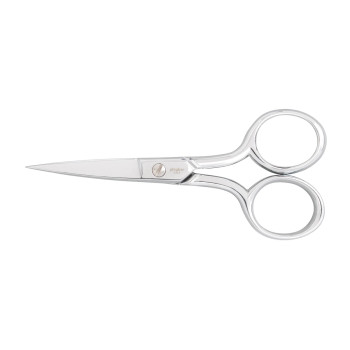
Gingher has made sewing scissors in Italy since 1947, and the 4″ embroidery pair is the one that shows up in every serious sewing basket. The blades are hand-finished, chrome over nickel, and they cut thread cleanly all the way to the tip, which is the whole test. Cheap scissors cut fine near the handle and chew near the tip. These do not.
Owners report keeping a pair for a decade or more. The double-loop handles fit small and large hands, and the included leather sheath means the tips survive rattling around a notions box. Quilters use them to clip chain piecing. Hand embroiderers use them for every thread tail. It is the default recommendation for a reason.
The honest knock: the finger loops are small if you have large hands, and at this price you will feel silly the first time you reach for them to cut paper. Do not cut paper with them. Ever.
Good
✓ Cuts thread cleanly right to the tip, which is what matters
✓ Hand-finished blades that owners say stay sharp for years
✓ Leather sheath included, protects the tips in a notions bag
Watch out for
✕ Small finger loops can feel cramped for large hands
✕ Pricier than generic embroidery scissors, and paper will ruin the edge
2. Kai 5100C 4″ Curved Tip Needlecraft Scissors

If you do machine embroidery, curved tips change the game. The Kai 5100C has sharp, hardened stainless blades that curve upward at the point, so you can slide the tips under a jump stitch and snip it without the blades touching the fabric below. Owners who trim in the hoop say it is the difference between clean designs and accidental holes.
Kai is a Japanese brand with a loyal following among quilters and embroiderers. The steel is hard, the blades stay sharp, and the whole thing weighs almost nothing. They are also popular with beaders and fly tiers, which tells you how fine the point work is.
Straight blades are more versatile for general snipping, so if you only buy one pair, buy the Gingher above. If you embroider in the hoop regularly, this is the second pair to own.
Good
✓ Curved tips trim jump stitches without nicking the base fabric
✓ Hardened Japanese stainless steel, holds an edge well
✓ Extremely light, easy to maneuver in tight hoop spaces
Watch out for
✕ Curved blades are a specialist shape, not the best all-rounder
✕ Slim handles, less comfortable for long cutting sessions
3. Premax 11533 Curved Embroidery Scissors

Premax is the Italian brand that serious needleworkers whisper about. Made in Italy from stainless steel, the 11533 is a 3.75″ curved embroidery scissor with a ring-lock style handle and a sandblasted finish that looks understated and feels balanced in the hand. The curve is gentle, which makes these good for both hoop trimming and close applique work.
Forum consensus puts Premax a notch above the mainstream brands for edge quality out of the box. Buyers say they arrive scary sharp and stay that way through a lot of thread cutting. They cost more than a generic curved scissor, but less than you would expect for Italian-made.
Note on the duckbill question: Premax does make a proper duckbill applique scissor (the 6″ F17830600, gold-plated handles, made in Italy), but we could not verify a current Amazon listing for it. If you shop quilt stores, it is worth asking for by name. For an Amazon-available duckbill, see pick 4 below.
Good
✓ Italian-made stainless steel, arrives very sharp
✓ Gentle curve works for both hoop trimming and close cutting
✓ Balanced, comfortable handle for detailed work
Watch out for
✕ Harder to find than Gingher or Kai, fewer sellers
✕ The Premax duckbill applique scissor has no verified Amazon listing
4. MAKER AND MARKET Applique Duckbill Scissors 5.8″

Duckbill scissors look strange and earn their place fast. The wide, flat “bill” blade slides under the top layer of an applique and holds the bottom fabric down while the top blade trims. That means you can cut close to a satin-stitched edge without slicing into the quilt underneath. Once you have trimmed applique with one, going back to regular scissors feels reckless.
This 5.8″ pair has the classic double-bent offset handle, which keeps your knuckles out of the work, and it comes with a pouch sleeve. Owners report the blades arrive sharp enough for stabilizer trimming and applique edges, and the rainbow finish makes them easy to spot in a sewing room.
Duckbill vs curved: curved embroidery scissors (picks 2 and 3) trim jump stitches in the hoop. Duckbills trim applique edges and stabilizer from behind. Different jobs, both worth owning if you applique.
Good
✓ Wide bill protects the base fabric while trimming close
✓ Double-bent handle keeps hands clear of the work surface
✓ Includes a pouch sleeve for storage
Watch out for
✕ Single-purpose tool, you will not use it for thread snipping
✕ Some owners say it needs a touch-up sharpening out of the box
5. CZZXI Thread Snips, 3-Pack

Thread snips are the workhorse nobody photographs. You squeeze, they cut, the spring pops them back open. No finger loops to fumble with, which makes them faster than scissors when you are chain piecing or trimming dozens of thread tails at the machine.
This 3-pack costs less than a fast-food lunch and buyers report the blades are sharp enough for thread and light fabric. The spring action is genuinely helpful for arthritic hands, since there is no repeated finger-loop motion. Keep one at the machine, one in the hand-sewing kit, one in the travel bag.
They will not replace a proper embroidery scissor for precision work, and the edge will not last a decade like the Gingher. But for the price, they are the best value on this list.
Good
✓ Spring action is fast and easy on tired or arthritic hands
✓ Three pairs for the price of a coffee, stash them everywhere
✓ Sharp enough for thread tails and light trimming
Watch out for
✕ Not a precision tool, tips are blunt compared to embroidery scissors
✕ Edge life is measured in months of heavy use, not years
6. Dovo Embroidery Scissors (Solingen, Germany)
Dovo has forged blades in Solingen, Germany for over a century, and their embroidery scissors are the connoisseur pick: precision-ground Solingen steel, decorative handles, a leather case included. Quilt shop owners and collectors rate them alongside Gingher, with some preferring the Dovo balance and finish work.
We could not verify a current Amazon listing for Dovo embroidery scissors, so there is no link here. If you want a pair, check specialty quilt shops and European sewing retailers, where models like the 3.5″ Club embroidery scissors turn up regularly. Buy these when you already own a workhorse pair and want something beautiful for handwork.
Good
✓ Solingen-forged steel with excellent fit and finish
✓ A favorite among collectors and hand embroiderers
Watch out for
✕ Not currently available on Amazon, so no link above
✕ Premium pricing for what is ultimately a second pair
Curved vs Straight: Which Blade Shape Do You Need?
Straight blades (Gingher, thread snips) are the generalists. They snip thread tails, clip curves, and trim seams. If you own one pair, make it straight.
Curved blades (Kai 5100C, Premax 11533) point slightly upward, which lets you slide under a thread lying on fabric and cut it without the blade tips touching the fabric. Machine embroiderers trimming jump stitches in the hoop live on curved tips. They also help when cutting stabilizer away from the back of embroidery.
Duckbill blades are the applique specialist, covered in pick 4. The shape looks odd because the job is odd: separating two fabric layers and cutting only one.
How We Picked
We did not lab-test scissors. We read hundreds of owner reviews on Amazon, sewing forum threads, and quilt shop recommendation lists, then weighted the things that actually decide whether a scissor gets used: does it cut cleanly at the very tip, does the edge last, and is the handle comfortable for small repetitive cuts. Brand reputation mattered, but only where it matched what owners reported. We excluded pairs with consistent complaints about dull tips or loose pivots, and we dropped any product we could not verify on Amazon from the linked picks.
FAQs
What is the difference between embroidery scissors and regular scissors?
Embroidery scissors are small, usually 3.5 to 4 inches, with fine sharp points that cut thread cleanly at the tip. Regular sewing shears are longer and made for cutting fabric; their tips are too blunt for precise thread work.
Are curved embroidery scissors better than straight?
Neither is better overall. Curved tips are better for trimming jump stitches in machine embroidery because the curve lifts the blade away from the fabric. Straight blades are better as an all-purpose pair for thread tails, clipping, and general snipping.
What are duckbill scissors used for?
Trimming applique. The wide flat bill slides between fabric layers and protects the bottom layer while the top blade cuts the applique edge close to the stitching. They are also handy for grading seams.
Do I need thread snips if I have embroidery scissors?
Not strictly, but most sewists end up with both. Snips are faster for repetitive thread cutting at the machine because there are no finger loops, and a cheap 3-pack means one lives at every workstation.
How do I keep embroidery scissors sharp?
Cut only thread and light fabric, never paper or plastic. Wipe the blades after use, store them in a sheath so the tips do not bang against other tools, and get them professionally sharpened when they start folding thread instead of cutting it.
Are Gingher scissors worth the price?
For the main pair you reach for daily, owners overwhelmingly say yes. The edge quality at the tip and the years of service make them cheaper per year than replacing dull generics. For a second or travel pair, a budget snip is fine.