
As an Amazon Associate I earn from qualifying purchases.
The internet will teach you any single sewing technique in five minutes. What it will not do is organize those techniques into a curriculum, sit on your sewing table open to the right page, or work when the wifi is down. That is what books are for, and the good ones earn their shelf space for decades.
This guide covers the seven beginner sewing books most worth owning: the big references that answer every “how do I…” question, and the project books that turn techniques into finished things. Between them, they cover everything from threading the machine to tailoring a jacket.
TL;DR: Buy one reference and one project book. The Reader’s Digest Complete Guide to Sewing (~$25-40) is the classic answer-everything reference, and Alison Smith’s The Sewing Book (~$25-40) is its modern, photographed equivalent. For learning by doing, School of Sewing by Shea Henderson (~$18-25) walks you through twelve projects across a year, Sew Me! Sewing Basics (~$10-15) is the cheapest true-beginner start, and Tilly and the Buttons: Make It Simple (~$20-30) takes you into garments.
At a Glance, Our Scores
| Pick | Best for | Our score | Typical price | Buy |
|---|---|---|---|---|
| Reader’s Digest Complete Guide to Sewing | Best classic reference | 9.5/10, the standard sewing reference since 1976 | ~$25-40 | Check Price on Amazon |
| The Sewing Book by Alison Smith | Best modern reference | 9.4/10, 300+ techniques with step-by-step photos | ~$25-40 | Check Price on Amazon |
| School of Sewing by Shea Henderson | Best learn-by-doing course | 9.3/10, twelve projects that build real skills | ~$18-25 | Check Price on Amazon |
| Tilly and the Buttons: Make It Simple | Best garment projects | 9.1/10, 24 quick projects with full-size patterns | ~$20-30 | Check Price on Amazon |
| Sew Me! Sewing Basics by Choly Knight | Best budget starter | 8.8/10, fifteen simple projects, very low price | ~$10-15 | Check Price on Amazon |
| Sew Simple by Tammy Johal | Best modern dressmaking intro | 8.9/10, twenty beginner garment designs, sizes 2-28 | ~$20-30 | Check Price on Amazon |
| Sew Your Own Wardrobe by Alison Smith | Best technique deep-dive | 9.0/10, 80+ dressmaking techniques plus 13 patterns | ~$25-40 | Check Price on Amazon |
Prices move constantly on Amazon, every “Check Price on Amazon” link below takes you to the live listing.
Quick Picks
- Best reference: Reader’s Digest Complete Guide to Sewing (~$25-40). Answers everything, lasts decades.
- Best modern reference: The Sewing Book by Alison Smith (~$25-40). Same idea, all-new photography.
- Best course-style book: School of Sewing by Shea Henderson (~$18-25). Twelve projects, real progression.
- Best budget pick: Sew Me! Sewing Basics (~$10-15). Fifteen projects for the price of lunch.
- Best for garments: Tilly and the Buttons: Make It Simple (~$20-30). Quick clothes with great instructions.
1. Reader’s Digest Complete Guide to Sewing
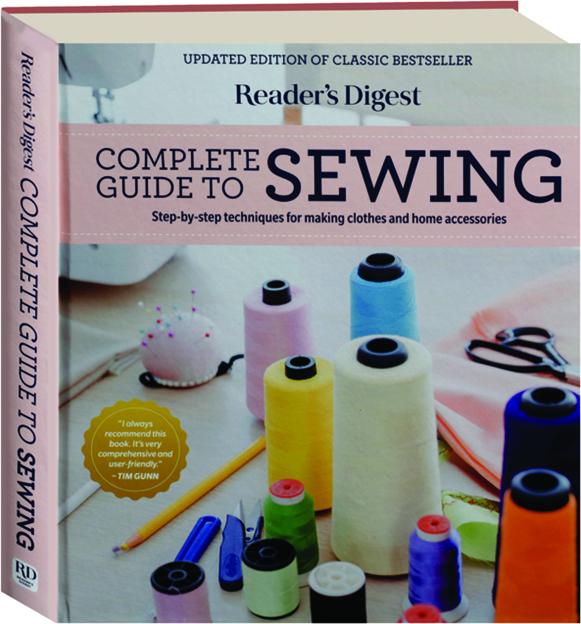
First published in 1976 and refreshed for the modern era, this is the book that sits on more sewing tables than any other. Three hundred eighty-four pages cover equipment, fabrics, hand stitches, machine techniques, pattern reading, garment construction, and home dec, with thousands of illustrations showing each step.
Its strength is completeness. Whatever odd question comes up mid-project, the answer is in here, explained clearly and illustrated well. Beginners use it as a textbook; experienced sewists use it as the reference they reach for when a technique they have not used in years comes back around.
Buyers consistently describe it as the single most useful sewing book they own, and copies get handed down the way good tools do. If your shelf holds one sewing book, make it this one.
Good
✓ The most complete beginner-to-advanced sewing reference in print
✓ Thousands of illustrations make techniques genuinely learnable
✓ Covers garments, home dec, equipment, and fabrics in one volume
Watch out for
✕ It is a reference, not a project book, pair it with one below
✕ Its size can intimidate, use the index rather than reading cover to cover
2. The Sewing Book by Alison Smith

Alison Smith, MBE for services to sewing, runs one of the UK’s most respected sewing schools, and this book is her classroom in print. Over three hundred techniques are shown in photographed step-by-step sequences: seams, hems, darts, gathers, collars, zippers, and everything between.
What sets it apart is the teaching quality. Smith anticipates mistakes and shows the right way alongside the common wrong ways, which is exactly what a beginner needs and what most references skip. Ten homeware and clothing projects let you practice immediately.
Owners describe it as the book they wish they had started with, and sewing teachers recommend it constantly. If you prefer learning from photographs rather than illustrations, buy this instead of, or as well as, the Reader’s Digest guide.
Good
✓ 300+ techniques with exceptional step-by-step photography
✓ Written by one of the world’s most decorated sewing teachers
✓ Ten projects turn reference material into practiced skills
Watch out for
✕ Hefty hardcover, better as a table reference than a travel book
✕ UK-origin measurements included alongside metric and imperial, check which you follow
3. School of Sewing by Shea Henderson
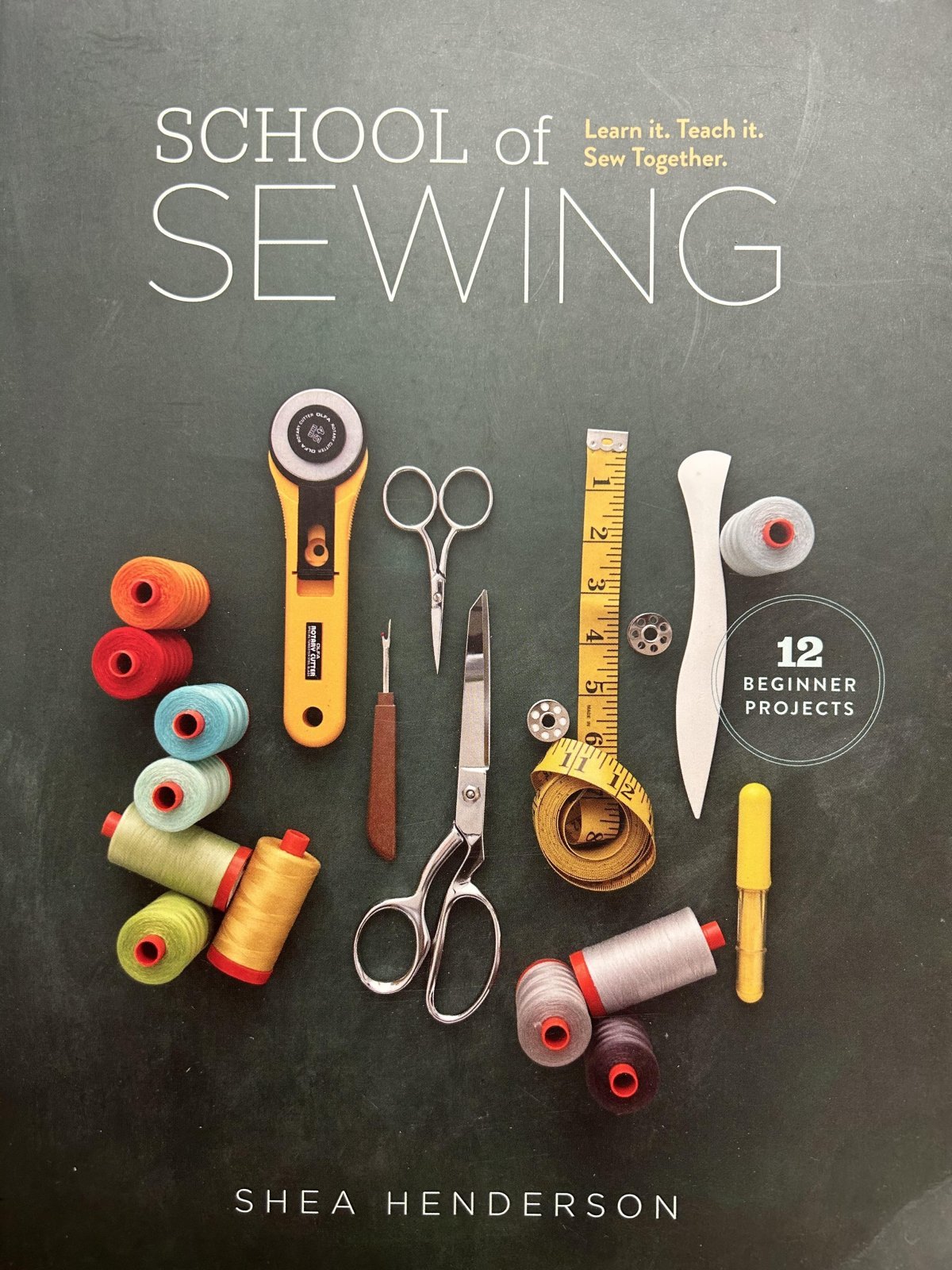
This book began as a real class: Shea Henderson taught a group of complete beginners in her kitchen, one project a month for a year, and turned the curriculum into this guide. Twelve projects progress from a pillowcase through zippered pouches and tote bags to a finished patchwork quilt, each building on the last, with “extra credit” variations for the ambitious.
The format is what makes it special. Instead of a dictionary of techniques, you get a course: month one teaches the machine with a pillowcase, month six tackles zippers with a pouch, month twelve finishes with a quilt. The advice from Henderson’s twelve students is woven through the book, so the troubleshooting tips come from people who made the same mistakes you will make.
It won the IBPA Ben Franklin Gold Award for craft books, and buyers say it is the rare beginner book genuinely written for adults. If you learn best by following a structured plan rather than dipping into a reference, start here.
Good
✓ True curriculum: twelve projects in skill-building order
✓ Real-student tips address actual beginner mistakes
✓ Ends with a quilt, so the progression feels like an achievement
Watch out for
✕ Project-based, you will still want a reference for odd questions
✕ Monthly pacing is a suggestion, not a rule, sew at your own speed
4. Tilly and the Buttons: Make It Simple

Tilly Walnes is the beginner’s champion of the sewing world: a Great British Sewing Bee alumna whose patterns are famous for instructions that never assume knowledge. Make It Simple gives you twenty-four projects from six full-size patterns, t-shirts, cardigans, pinafores, trousers, a playsuit, all designed to be sewn in an afternoon with no fiddly fastenings.
For a beginner book list, this is the bridge from crafts to clothes. The tone is encouraging without being patronizing, every step has a photo, and the patterns come in ten sizes with layered lines for tracing.
It pairs naturally with a reference book above: look up the technique in the Reader’s Digest guide or The Sewing Book, then sew the project here. Between the two you have both the what and the how.
Good
✓ Twenty-four genuinely quick projects with full-size patterns
✓ The clearest beginner garment instructions in print
✓ Ten sizes included, projects you will actually wear
Watch out for
✕ Simple styles only, not for advanced tailoring ambitions
✕ Garment-focused, not a general sewing reference
5. Sew Me! Sewing Basics by Choly Knight
Fifteen projects, a price barely above a fancy coffee, and a structure that teaches each skill alongside the project that needs it. Sew Me! starts at absolute zero, choosing a machine, sewing a first seam, fixing mistakes, and builds through applique, curves, interfacing, gathering, binding, zippers, and knit fabrics.
This is the book to buy for a teenager with a new machine, or for yourself if the bigger references feel intimidating. The directions are friendly and the projects are small enough to finish in an evening, which matters enormously for motivation. Finishing things is what turns a curious beginner into a committed sewist.
It is not comprehensive and does not pretend to be. Think of it as the first rung: finish these fifteen projects and you will be ready for School of Sewing or Make It Simple above.
Good
✓ The cheapest credible start in beginner sewing books
✓ Each skill taught alongside a quick project that uses it
✓ Small, finishable projects keep motivation high
Watch out for
✕ Introductory depth only, you will outgrow it
✕ Accessory and craft focus, limited garment instruction
6. Sew Simple by Tammy Johal

Tammy Johal learned to sew five years before writing this book, which turns out to be an advantage: she remembers exactly what confused her and explains it the way she wishes someone had explained it to her. Twenty garment designs, all slip-on styles with no tricky fastenings, in US sizes 2 to 28, each sewn in a couple of hours.
The slip-on constraint is clever. By eliminating zippers and buttons, the book keeps every project genuinely beginner-feasible while still producing a real wardrobe. The core techniques section covers fabric choice, pattern reading, and essential stitches before the projects begin.
Buyers praise the modern aesthetic and the inclusive sizing. If your goal is making your own clothes and you want the most modern-feeling guide on this list, this is it.
Good
✓ Twenty modern garment designs, all truly beginner-sewable
✓ Inclusive sizing from US 2 to 28
✓ No zippers or buttons means no frustration points
Watch out for
✕ Slip-on styles only, a deliberate limit worth knowing
✕ Less hand-holding on fitting than the Tilly books
7. Sew Your Own Wardrobe by Alison Smith
The second Alison Smith book on this list is the graduate course. More than eighty dressmaking techniques, graded by difficulty, plus thirteen downloadable patterns that combine into thirty-one garments: dresses, skirts, trousers, tops, and jackets.
It earns its place on a beginner list because it is the book you grow into rather than out of. Start with the simpler techniques and easy patterns, and it is still teaching you new things three years later. Downloadable patterns remove the tissue-paper frustration of traditional envelopes.
Owners describe it as the book that took them from “I can sew” to “I can make clothes.” Buy it alongside The Sewing Book and you have Smith’s complete system: techniques in one, wardrobe-building in the other.
Good
✓ 80+ techniques graded by difficulty, from simple to advanced
✓ Thirteen patterns yielding thirty-one garments
✓ A book you grow into over years, not months
Watch out for
✕ Dressmaking focus, less useful for quilters
✕ Assumes basic machine competence, not a first book
Reference Books vs Project Books: Which Do You Need?
Reference books (the Reader’s Digest guide, The Sewing Book) answer questions. Project books (everything else on this list) teach through doing. You need one of each.
The reference lives on the sewing table, spine cracked to the technique of the week. The project book lives in your lap on the couch, where you pick what to make next. Beginners who buy only a reference stall out for lack of direction; beginners who buy only project books stall the first time a technique confuses them. One of each costs less than a single yard of designer fabric.
One more beloved title deserves mention: Tilly Walnes’s Love at First Stitch, the book that launched her career, teaches dressmaking project by project from a headscarf to a lined dress. We could not verify a stable current listing for it, so it is an honorable mention rather than a ranked pick; search the title on Amazon or ask your local bookstore.
How We Picked
We chose books with long track records of beginner recommendations: titles that sewing teachers assign and that dominate “best sewing book” discussions. Clarity of instruction and honest beginner targeting outweighed everything. All seven have verified, stable Amazon listings; prices are typical ranges that move with sales.
FAQs
What is the single best sewing book for a complete beginner?
The Reader’s Digest Complete Guide to Sewing if you want a reference, or School of Sewing if you want a course. Most beginners do best with one of each.
Are old editions of sewing books still useful?
Mostly yes for techniques, since seams and hems have not changed. But old editions predate modern machines and current sizing, so for your main reference, buy a current edition. Vintage copies are fun supplements, not primary teachers.
Book or YouTube for learning to sew?
Both, for different things. Books give you structured progression and a searchable reference; video shows hand positions and machine sounds that print cannot convey. Use a book for the curriculum and video for the tricky steps.
Do I need a book if my machine came with a manual?
The manual teaches your machine; a book teaches sewing. Manuals cover threading and maintenance brilliantly and say nothing about fabric choice, pattern reading, or fitting. You need both.
What is the difference between the two Alison Smith books?
The Sewing Book is the general reference: 300+ techniques for all kinds of sewing. Sew Your Own Wardrobe is the dressmaking deep-dive: 80+ garment techniques plus patterns. Start with The Sewing Book.
Where should I buy sewing books?
Amazon for price and availability, your local quilt or fabric shop for curated picks and the chance to flip through first, and the library for trying before buying. Used bookstores often have older editions of the classics for a few dollars.