
As an Amazon Associate I earn from qualifying purchases.
A walking foot is the single most useful presser foot most sewists never buy. It looks like a bulky, mechanical attachment, and it costs less than a pizza. But it solves an entire category of sewing frustration: fabric layers shifting, knits stretching out, and quilt sandwiches coming out puckered.
TL;DR: A walking foot feeds the top layer of fabric with its own little set of feed dogs, so all layers move together. You need one for quilting, knits, slippery fabrics, matching plaids, and thick seams. You do not need one for basic piecing or single-layer sewing. Check whether your machine is low-shank or high-shank before buying an add-on foot.
What a Walking Foot Actually Does
Your sewing machine has feed dogs under the needle plate. They grip the bottom layer of fabric and push it through. The top layer, meanwhile, is just dragged along by friction against the presser foot. On thin, stable fabric, that works fine. On anything thick, stretchy, or slippery, the bottom layer moves faster than the top, and the layers shift.
A walking foot fixes this with a second set of feed dogs built into the foot itself. These little teeth grip the top layer and march it through in sync with the bottom layer. Both layers move at the same speed, so nothing shifts, stretches, or puckers. That is the whole trick, and it works beautifully.

When a Walking Foot Helps
Quilting. This is the walking foot’s home turf. A quilt sandwich (top, batting, backing) is three thick, shifty layers. Straight-line quilting, stitch-in-the-ditch, and binding all come out dramatically better with a walking foot. Most quilters consider it mandatory, not optional.
Knits and stretch fabrics. Jersey, interlock, and ponte stretch as they sew, and a standard foot can make them grow a full size by the time you finish a seam. The walking foot’s even feeding keeps knits honest. Pair it with a stretch or ballpoint needle and your T-shirt seams will lie flat.
Slippery fabrics. Satin, silk, chiffon, and vinyl slide around under a normal foot. The walking foot’s top feed dogs grip what a smooth presser foot cannot.
Matching plaids and stripes. If you have ever sewn a plaid seam and watched the pattern drift half an inch out of alignment, a walking foot is your answer. Even feeding keeps patterns matched across the seam line.
Thick seams and multiple layers. Bag making, denim hems, and home decor projects stack up layers that a standard foot cannot feed evenly. The walking foot powers through where a regular foot skips and stalls.
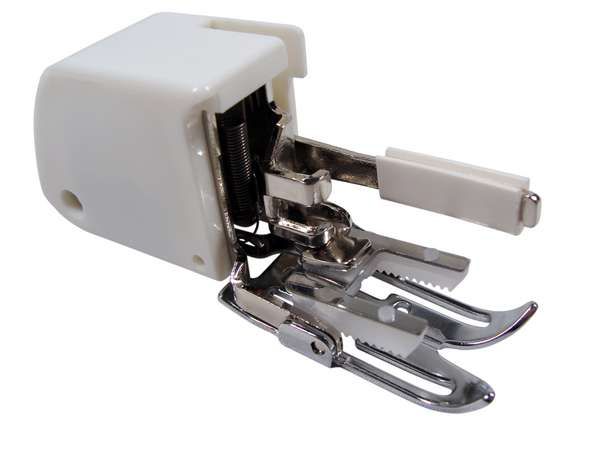
When You Do Not Need One
A walking foot is not a magic upgrade for everything. You do not need one for basic straight sewing on quilting cotton, for piecing quilt blocks (where a quarter-inch foot is the right tool), or for single layers of stable fabric. It is also the wrong tool for free-motion quilting, which needs the feed dogs dropped and a darning foot instead.
One more honest note: a walking foot will not fix a dull needle, wrong thread, or bad tension. It fixes feeding problems. If your stitches are looping underneath, that is tension, not feeding.
Built-In Dual Feed vs Add-On Feet
Some machines come with the walking-foot concept built in. Janome’s AcuFeed and Pfaff’s IDT (Integrated Dual Feed) systems engage a top feed mechanism with a lever, no attachment needed. These built-in systems are excellent: they are always aligned, never need swapping, and work with the machine’s regular feet.
The downside is price. Machines with built-in dual feed start in the mid-range and go up from there. For everyone else, a $10-15 add-on walking foot gives you 90% of the benefit. If you are choosing between a machine with built-in dual feed and a cheaper machine plus an add-on foot, the add-on foot is the better value unless you quilt constantly.
Low-Shank vs High-Shank: Buy the Right One
This is where people waste money. Presser feet come in shank heights, and most modern home machines are low-shank. High-shank machines (many older Singers, some Pfaffs and Berninas) need high-shank feet.
A universal low-shank walking foot fits most Brother, Singer, Janome, Juki, and Babylock home machines. But “most” is doing heavy lifting in that sentence. Check your manual or measure: with the presser foot down, low-shank machines have about half an inch from the needle plate to the bottom of the presser bar. If you are unsure, search your exact model plus “shank type” before ordering. A walking foot that does not fit your shank is a paperweight.
The Distinctive even-feed walking foot below is a well-reviewed universal low-shank option that fits most top-loading, drop-in bobbin machines from Singer, Brother, Babylock, Janome, and similar brands. Confirm your machine is low-shank first.
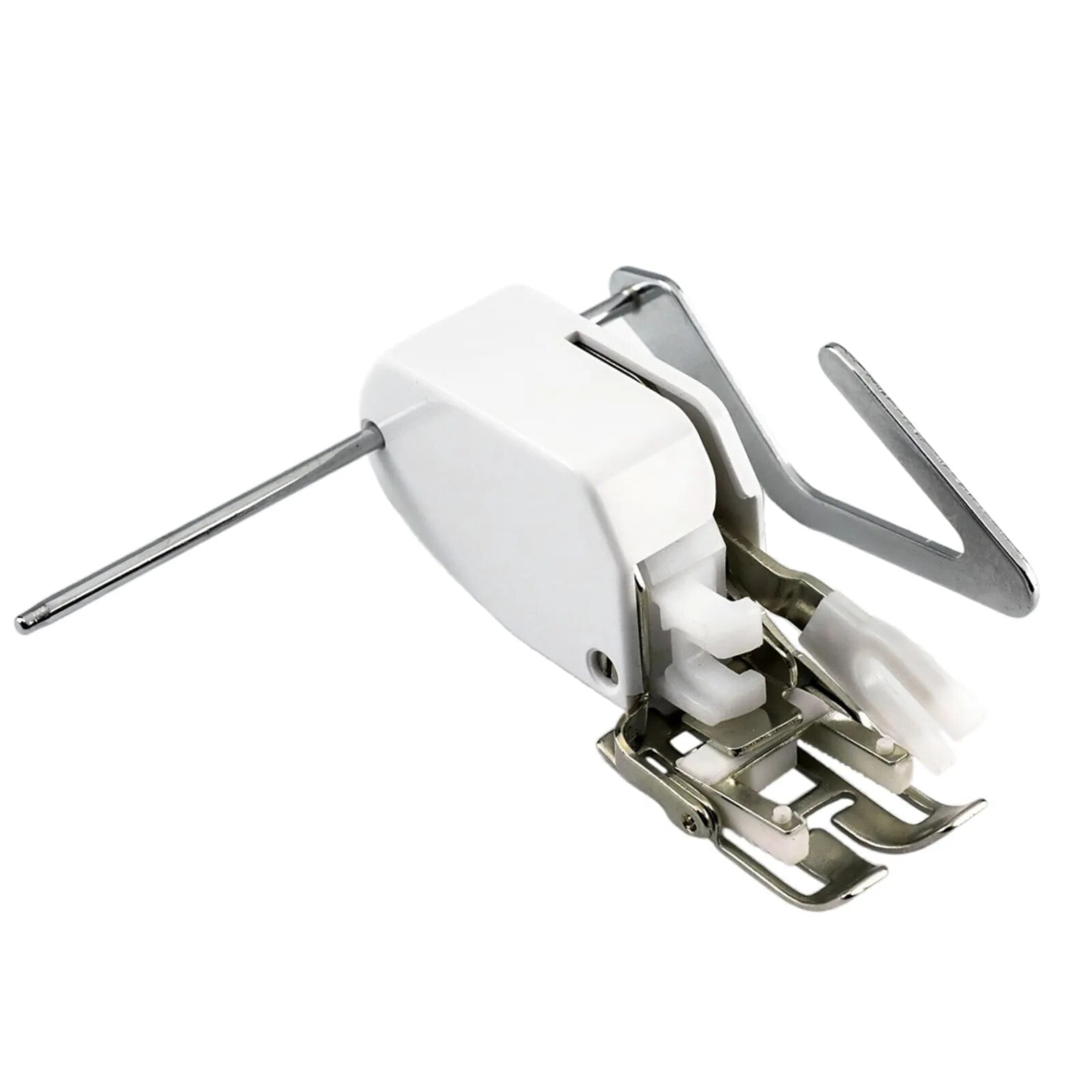
Do You Need One? A Quick Decision Table
| You sew… | Do you need a walking foot? |
|---|---|
| Quilts (sandwich quilting, binding) | Yes, absolutely |
| Knit garments (T-shirts, leggings) | Yes, strongly recommended |
| Slippery fabrics (satin, vinyl, minky) | Yes |
| Matching plaids or stripes | Yes |
| Bags, denim, home decor (thick layers) | Yes |
| Basic quilt piecing | No, use a 1/4 inch foot |
| Single-layer cotton garments | No, standard foot is fine |
| Free-motion quilting | No, use a darning foot with feed dogs down |
Frequently Asked Questions
Can I leave the walking foot on all the time?
You can, but you should not. It is bulkier and noisier than a standard foot, and it reduces visibility at the needle. Swap it on for the jobs that need it and keep a regular foot for everyday sewing.
Does a walking foot work for zigzag and decorative stitches?
Yes, on most machines. The foot moves with the fabric regardless of stitch type. Just keep the stitch width within the foot’s opening, and slow down on wide decorative stitches.
Will a walking foot fit my machine?
If your machine is low-shank (most modern Brother, Singer, Janome, Juki, and Babylock home machines), a universal low-shank walking foot almost certainly fits. High-shank and slant-shank machines need their own versions. When in doubt, check the manual.
Is a walking foot the same as an even-feed foot?
Yes. Walking foot, even-feed foot, and dual-feed foot all describe the same thing. Janome and Pfaff use “dual feed” for their built-in systems.
Why is my walking foot so loud?
The mechanism has moving parts that clack as they cycle. Some noise is normal. If it is dramatically louder than expected, check that it is seated correctly on the presser bar and that the fork arm is over the needle clamp screw.