
As an Amazon Associate I earn from qualifying purchases.
Here is the uncomfortable truth about sewing: pressing is half the work. A perfect seam that never meets an iron looks homemade in the worst way, while a mediocre seam that gets pressed properly looks professional. Quilters know this better than anyone. A quilt block that gets pressed after every seam comes out flat and square. One that does not comes out wavy, and no amount of quilting fixes it later.
That is why the iron sitting next to your sewing machine matters as much as the machine itself. Sewists press differently than garment ironers. We press in bursts: sew a seam, press it, sew the next one. We need an iron that heats fast, shuts off safely when we forget it, and does not demand to be tipped onto its heel sixty times an hour. Some of us also want a mini iron parked permanently next to the machine for seams and quilt blocks, plus a full-size iron at the big board for yardage.
Based on thousands of buyer reviews and consistent recommendations from sewing forums, these six irons are the ones worth your money in 2026. One full-size winner, one value pick, one cordless, and three minis for the pressing station next to your machine.
TL;DR: The Oliso TG1600 Pro Plus (~$170-$220) is the best iron for sewists, period. The auto-lift system means you never tip it on its heel, and the 30-minute shutoff survives real sewing sessions. On a budget, the Rowenta DW5280 (~$80-$110) gives you serious steam for half the price. For the mini iron that lives by your machine, the Oliso M2Pro (~$55-$70) is the one sewing forums consistently recommend.
At a Glance, Our Scores
| Pick | Best for | Our score | Typical price | Buy |
|---|---|---|---|---|
| Oliso TG1600 Pro Plus Smart Iron | Best overall | 9.4/10, auto-lift changes everything | ~$170-$220 | Check Price on Amazon |
| Rowenta DW5280 Focus Steam Iron | Best full-size value | 9.0/10, serious steam, sane price | ~$80-$110 | Check Price on Amazon |
| Panasonic NI-WL600 Cordless Iron | Best cordless | 8.7/10, no cord to fight | ~$120-$170 | Check Price on Amazon |
| Oliso M2Pro Mini Project Iron | Best mini iron | 9.1/10, lives by your machine | ~$55-$70 | Check Price on Amazon |
| Steamfast SF-717 Mini Steam Iron | Best budget mini | 8.2/10, cheap and cheerful | ~$30-$45 | Check Price on Amazon |
| Clover Mini Iron II, The Adapter Set | Best for applique and detail | 8.5/10, five tips, zero steam fuss | ~$25-$40 | Check Price on Amazon |
Prices move constantly on Amazon, every “Check Price on Amazon” link below takes you to the live listing.
Quick Picks
- Best overall: Oliso TG1600 Pro Plus, the auto-lift iron built for sewists who press in bursts, ~$170-$220.
- Best full-size value: Rowenta DW5280, 1725 watts of German steam engineering for half the Oliso price, ~$80-$110.
- Best cordless: Panasonic NI-WL600, press without the cord dragging across your cutting table, ~$120-$170.
- Best mini iron: Oliso M2Pro, the 1000-watt mini with the face-down silicone rest, ~$55-$70.
- Best budget mini: Steamfast SF-717, a 420-watt travel iron that punches above its price, ~$30-$45.
- Best for applique and detail: Clover Mini Iron II, five interchangeable tips for tight spots, ~$25-$40.
Detailed Reviews
1. Oliso TG1600 Pro Plus Smart Iron, Best Overall
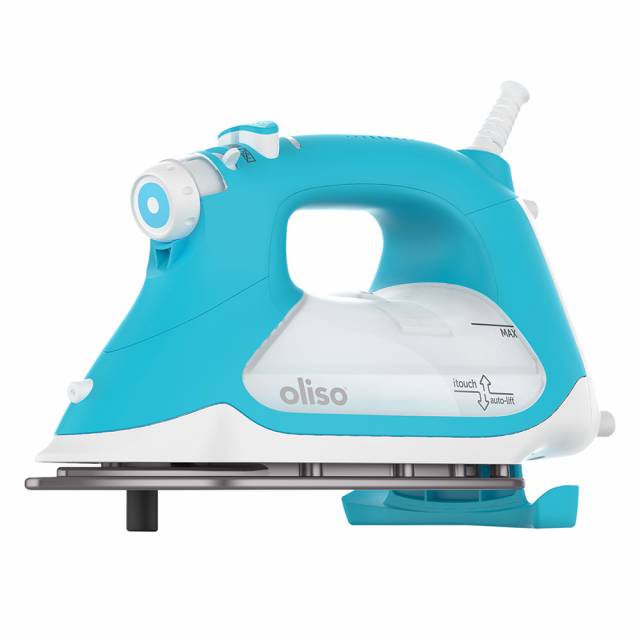
This is the iron that sewing forums talk about the way quilters talk about their favorite rotary cutter. The headline feature is the auto-lift system: touch the handle and the iron lowers onto the fabric, lift your hand and little feet pop out to raise it off the fabric. You never tip it onto its heel. For a sewist pressing a seam every two minutes, that single feature is worth the price of admission. Owners report it completely changes the rhythm of pressing during a sewing session.
Beyond the party trick, it is a genuinely powerful 1800-watt iron with a diamond ceramic-flow soleplate that glides well, strong variable steam, and a 30-minute auto shutoff. That last detail matters more than it sounds. Most irons shut off after 8 to 10 minutes of idleness, which means your iron is cold right when you come back from the machine. Thirty minutes matches how sewists actually work.
Good
✓ Auto-lift feet eliminate heel-tipping, a genuine workflow upgrade for burst pressing
✓ 30-minute auto shutoff stays hot through real sewing sessions
✓ 1800 watts with strong steam output and a smooth ceramic soleplate
✓ 12-foot 360-degree swivel cord reaches anywhere around the pressing station
✓ 2-inch precision detailer tip gets into seams and around buttons
Watch out for
✕ Premium price, roughly double the Rowenta below
✕ It is a full-size iron with real heft, not a lightweight
✕ The auto-lift mechanism adds moving parts, which is one more thing that can eventually wear
✕ Some buyers say it runs hot, so use a pressing cloth on delicate fabrics
✕ Water tank is on the smaller side for marathon pressing sessions
2. Rowenta DW5280 Focus Steam Iron, Best Full-Size Value
Rowenta has been the default answer to “what iron should I buy” for decades, and the DW5280 is why. It is a 1725-watt workhorse with a stainless steel soleplate pierced by 400 microsteam holes, which gives remarkably even steam distribution across the fabric. The 135 gram-per-minute steam boost flattens stubborn seams and quilt block intersections that weaker irons just warm up.
For sewing specifically, the precision tip is genuinely useful for getting into seam allowances, and the anti-drip system keeps water spots off your fabric. Owners report it as the iron they buy after a cheap iron dies, and then it lasts for years. It does not have the Oliso’s auto-lift or 30-minute shutoff, so you will be tipping it on its heel like a normal iron. At roughly half the price, most sewists accept that trade happily.

Good
✓ Excellent steam output for the price, with 400 steam holes for even distribution
✓ Stainless soleplate glides well and resists scratches from pins
✓ Precision tip reaches into seams, collars, and tight spots
✓ Anti-drip and self-cleaning systems keep maintenance simple
✓ Proven longevity, buyers report years of daily use
Watch out for
✕ Standard 8-minute auto shutoff means reheating breaks during long sessions
✕ Heavier than it looks at over 3 pounds, which tires wrists on big pressing days
✕ No auto-lift, you tip it on its heel like every other traditional iron
✕ Water tank requires refilling during large quilt-top pressing
✕ Some owners report leaking if stored with water left in the tank
3. Panasonic NI-WL600 Cordless Iron, Best Cordless
The cord is the enemy of a sewing pressing station. It drags across the cutting table, catches on rulers, and pulls the iron sideways mid-press. The Panasonic NI-WL600 solves this by going cordless: the iron sits on a charging base and you press freely, returning it to the base between bursts. For a sewist pressing one seam at a time, this rhythm works beautifully.
The double-tipped 360-degree soleplate irons in any direction, which sounds like a gimmick until you use it on quilt blocks and realize you are pressing seams without rotating the fabric. The detachable water tank fills at the sink, and the retractable cord on the base keeps storage tidy. Owners consistently report that once they go cordless for sewing, they never go back.

Good
✓ Cordless freedom is transformative at a sewing pressing station
✓ Double-tipped soleplate presses in any direction without repositioning fabric
✓ Detachable water tank refills easily at the sink
✓ Retractable cord and snap-on heat-resistant case make storage clean
✓ Anti-drip and anti-calcium systems protect fabric and the iron
Watch out for
✕ You get about a minute of steam per charge, then it goes back on the base to reheat
✕ Not ideal for pressing large yardage or whole quilt tops in one go
✕ The base plus iron takes up more table space than a lone iron
✕ 1500 watts is less raw power than the corded picks above
✕ At this price you are paying a premium for the cordless convenience
4. Oliso M2Pro Mini Project Iron, Best Mini Iron
Ask in any quilting group what mini iron lives next to the sewing machine and the M2Pro wins by a landslide. It is a 1000-watt mini with a real ceramic soleplate, real steam on demand, and a clever silicone rest called the Solemate that lets you set the iron face-down between presses. No heel-tipping, no fumbling, just grab, press, and set it down.
At 1000 watts it heats in about 45 seconds and has genuine pressing power for seams, quilt blocks, and small piecing, unlike toy travel irons that merely warm fabric. The dual voltage makes it a retreat and travel favorite, and the precision tip handles bias seams and small pieces. Owners report it as the single biggest quality-of-life upgrade to their sewing table, which is remarkable for a sixty-dollar tool.

Good
✓ Solemate silicone rest lets you park it face-down, ready instantly
✓ 1000 watts is real pressing power in a mini body
✓ Precision tip is perfect for seams, quilt blocks, and small piecing
✓ Dual voltage and compact size make it ideal for retreats and classes
✓ Steam on demand with a button, dry pressing the rest of the time
Watch out for
✕ Small soleplate means it is slow for anything bigger than blocks and seams
✕ Water tank is tiny, so steam sessions are short
✕ It is not a substitute for a full-size iron on yardage
✕ Costs more than generic mini irons, though owners say it is worth it
✕ The Solemate rest is great but adds to the footprint on a crowded table
5. Steamfast SF-717 Mini Steam Iron, Best Budget Mini
Not everyone wants to spend sixty dollars on a mini iron, and the Steamfast SF-717 has been the budget answer for years. It is a 420-watt mini travel iron with dual voltage, a non-stick soleplate, a travel bag, and three temperature settings. It heats in about 15 seconds and the 1.4-ounce tank is good for quick touch-ups.
Sewing forums consistently recommend it as a retreat iron and a first mini iron. Owners report it handles seams and small pressing jobs fine, and at this price you will not cry if it gets knocked off a retreat table. The honest caveat is power: 420 watts will not muscle through heavy seams or multiple layers the way the Oliso mini will. Give the steam button a few seconds after pressing it or it sputters, which is the most common owner complaint.

Good
✓ Very affordable entry into mini-iron life
✓ Heats in about 15 seconds, ready almost immediately
✓ Dual voltage and travel bag included for classes and retreats
✓ Compact and light, easy to keep right by the machine
✓ Simple three-setting temperature dial, no learning curve
Watch out for
✕ 420 watts is modest, struggles with heavy seams and thick layers
✕ Steam sputters if you rush it, wait a few seconds after pressing the button
✕ Tiny water tank needs frequent refills during steam pressing
✕ Build quality is budget grade, this is not a buy-it-for-life tool
✕ No auto shutoff, so unplug it when you walk away
6. Clover Mini Iron II, The Adapter Set, Best for Applique and Detail
The Clover Mini Iron II is a different animal from every other iron here: a slim, pen-style mini iron with five interchangeable tips. It is the tool for applique, doll making, bias tape, stenciling, and anywhere a normal iron head simply cannot fit. It weighs almost nothing and the long handle keeps your fingers away from the heat, which owners of the original Clover mini iron will appreciate.
There is no steam, and that is the point. For applique and detail work you want dry, controlled heat in a precise spot, not a puff of steam warping your placement. The dial heat control and on/off switch are simple, and the included stand keeps it safe between touches. Buyers consistently report it as the finishing tool they reach for after the real pressing is done.

Good
✓ Five interchangeable tips cover applique, bias work, and tiny seams
✓ Slim pen shape reaches spots no regular iron can touch
✓ Lightweight at 2.5 ounces, easy to control for detail work
✓ Dry heat with dial control, no steam to disturb delicate placement
✓ Inexpensive for a specialty tool you will use for years
Watch out for
✕ No steam at all, so it cannot replace a real iron for seams
✕ Changing tips requires the included screwdriver and a cool iron
✕ The tip gets very hot, keep it away from children and curious pets
✕ Cord is long but the iron itself is slow for anything beyond detail work
✕ Not useful for general pressing, this is a specialist
What to Look For When Buying
Auto shutoff timing matters more for sewists than for anyone else. A standard iron shuts off after 8 to 10 idle minutes, which is exactly the gap between pressing sessions when you are at the machine. The Oliso’s 30-minute shutoff exists because sewists asked for it. If you press in bursts, prioritize a long shutoff window.
Decide where the iron will live. A full-size iron belongs at a real ironing board for yardage and quilt tops. A mini iron belongs on the table next to your machine for seams and blocks. Many serious sewists own both, and the mini gets used ten times more often.
Steam versus dry is a real debate in quilting. Steam gives crisper seams and flatter blocks, but it can also distort bias edges and shrink fabric unevenly if you are aggressive. Most quilters press quilt blocks with steam and garment seams with dry heat or a burst only. An iron that does both, with steam on demand rather than constant, gives you the choice.
Soleplate material is a durability question. Stainless steel (Rowenta) resists scratches from pins and lasts. Ceramic (Oliso) glides beautifully and cleans easily but can chip if dropped. Non-stick coatings (budget minis) glide well at first and wear over time.
Weight is a feature, not just a spec. A heavier iron presses with less effort from you, which matters on big pressing days. A lighter iron is kinder to wrists during quick seam pressing. There is no right answer, only the tradeoff.
Cord length and swivel determine your setup. A 12-foot 360-degree cord (Oliso) means the iron lives anywhere. A short fixed cord means the outlet dictates your pressing station. Cordless (Panasonic) removes the question entirely.
Frequently Asked Questions
Can I just use my regular clothes iron for sewing?
Yes, absolutely. Any working iron presses a seam. The sewing-specific features (long auto shutoff, auto-lift, mini size for the machine table) are about workflow and convenience, not about whether the iron functions. If you already own a decent iron, spend your money on a mini iron for the sewing table instead of replacing the big one.
Should I use steam or dry heat on quilt blocks?
Most quilters use steam for quilt blocks because it produces flatter, crisper seams. The risk is distortion: steam plus pressure can stretch bias edges. Press with an up-and-down motion rather than sliding the iron, and you get the crispness without the stretch. For garment seams, many sewists prefer dry heat or a short steam burst.
What temperature should I press cotton quilting fabric?
The cotton or linen setting, which is the high end of most iron dials. Quilting cotton can take real heat, and high heat with steam gives the crispest seams. Use a pressing cloth or lower heat for synthetics, silks, and anything with fusible interfacing until you know how it behaves.
Do I really need a mini iron?
You do not need one, but owners report it is the most-used pressing tool they own. Pressing a seam without getting up and walking to the ironing board means you actually press every seam, and pressing every seam is what makes projects look good. The Steamfast SF-717 costs less than a decent pizza night, so the barrier is low.
How do I clean a scorched or sticky soleplate?
For fusible residue, press the hot iron onto a dryer sheet or use a commercial iron cleaner paste. For scorch marks on stainless, a paste of baking soda and water with a soft cloth works. Never use steel wool or abrasive pads on ceramic or non-stick soleplates. The real prevention is a pressing cloth and not leaving the iron face-down on fusibles.
Is the Oliso TG1600 worth twice the price of the Rowenta?
If you press in bursts while sewing, yes, according to the overwhelming consensus of owner reviews. The auto-lift and 30-minute shutoff directly solve the two annoyances of pressing during sewing sessions. If you mostly iron clothes and occasionally press seams, the Rowenta gives you 90 percent of the pressing performance for half the money.