
As an Amazon Associate I earn from qualifying purchases.
The first rule of fabric scissors is also the most broken: never cut paper with them. Paper dulls the fine edge that makes fabric shears glide, and once that edge is gone, you are back to chewing through fabric instead of slicing it. Buy a cheap pair of paper scissors and keep your fabric shears sacred.
The second rule is that good shears are worth the money. A quality pair of dressmaker’s shears cuts all the way to the tip, holds its edge for years, and makes cutting fabric genuinely pleasant instead of a hand-cramping chore. Based on buyer reviews and decades of sewist recommendations, these six pairs cover every budget and need.
TL;DR: The Gingher 8″ Knife Edge Dressmaker’s Shears (~$40-50) are the buy-it-for-life pick. The Fiskars 8″ RazorEdge Softgrip (~$25-35) gives you premium cutting comfort for less. On a tight budget, the LIVINGO 8″ Premium Tailor Scissors (~$10-15) punch far above their price.
At a Glance, Our Scores
| Pick | Best for | Our score | Typical price | Buy |
|---|---|---|---|---|
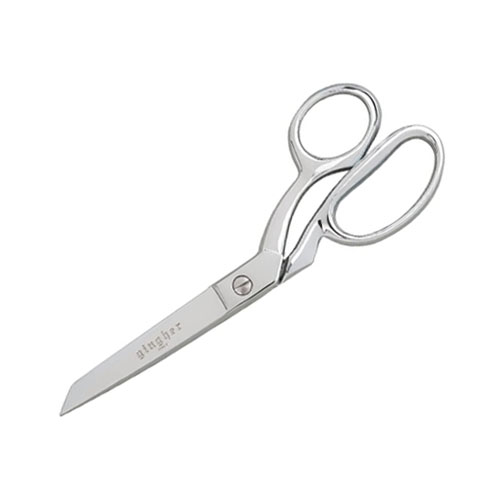
| Gingher 8-Inch Knife Edge Dressmaker’s Shears | Best overall | 9.5/10, buy-it-for-life shears | ~$40-50 | Check Price on Amazon |
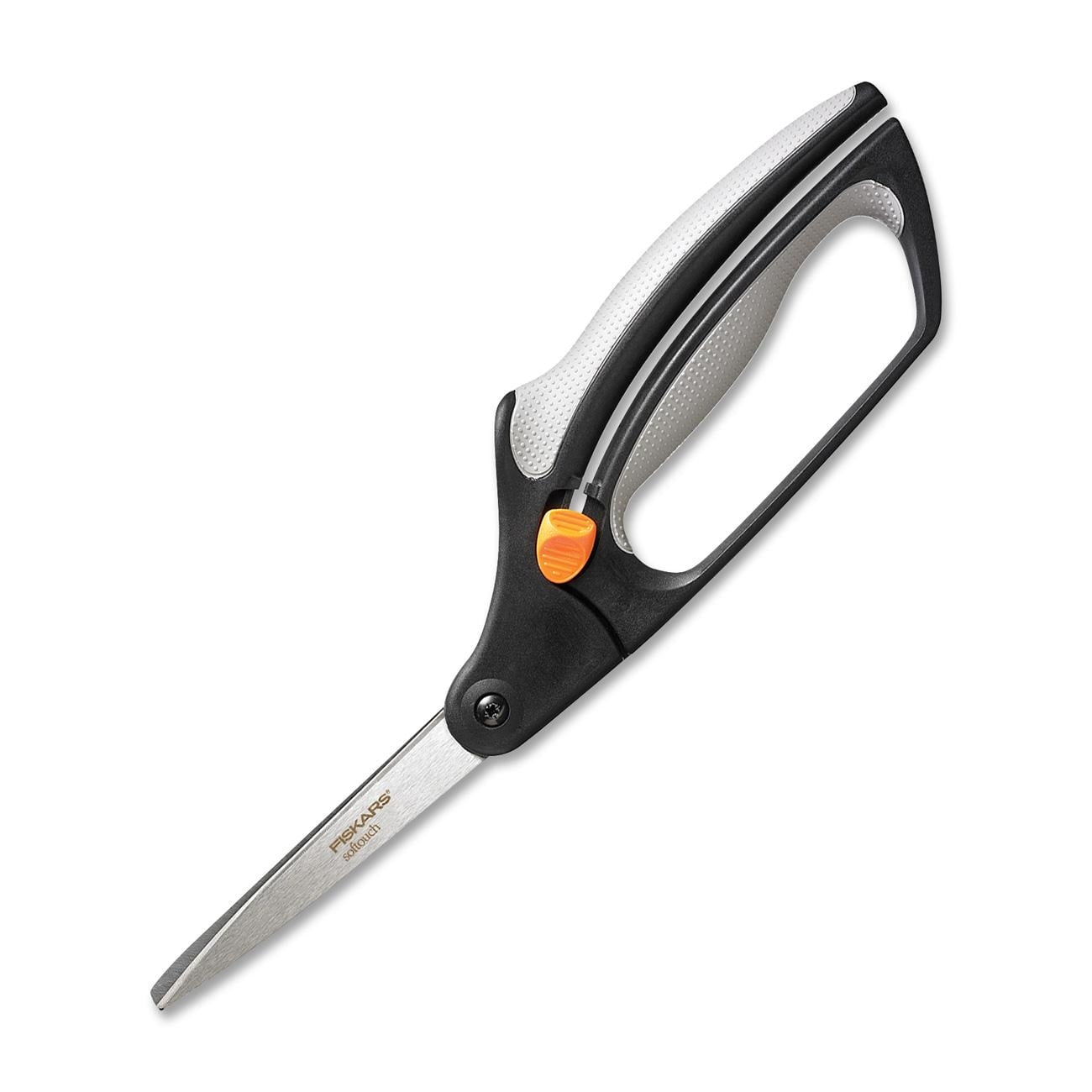
| Fiskars 8″ RazorEdge Softgrip Scissors | Best comfort | 9.0/10, premium feel, easy on hands | ~$25-35 | Check Price on Amazon |
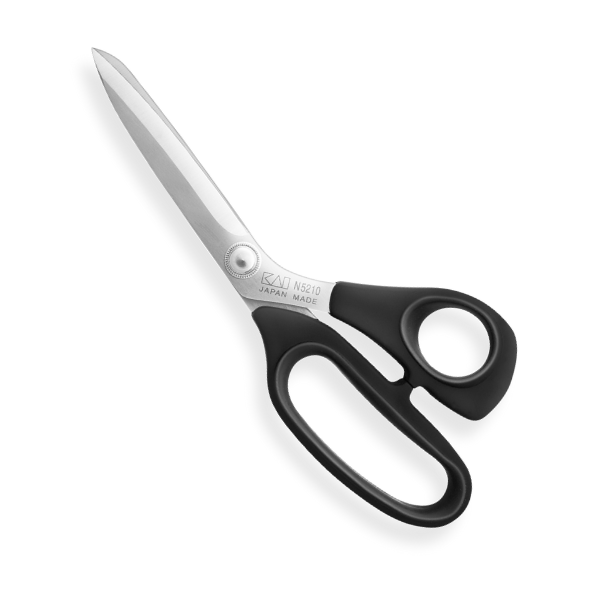
| Kai 5210 8-inch Dressmaking Shears | Best precision | 9.2/10, Japanese sharpness | ~$30-40 | Check Price on Amazon |
| Havel’s 5.5″ Serrated Fabric Scissors | Best for slippery fabrics | 8.5/10, serrations grip the fabric | ~$15-20 | No confirmed listing |
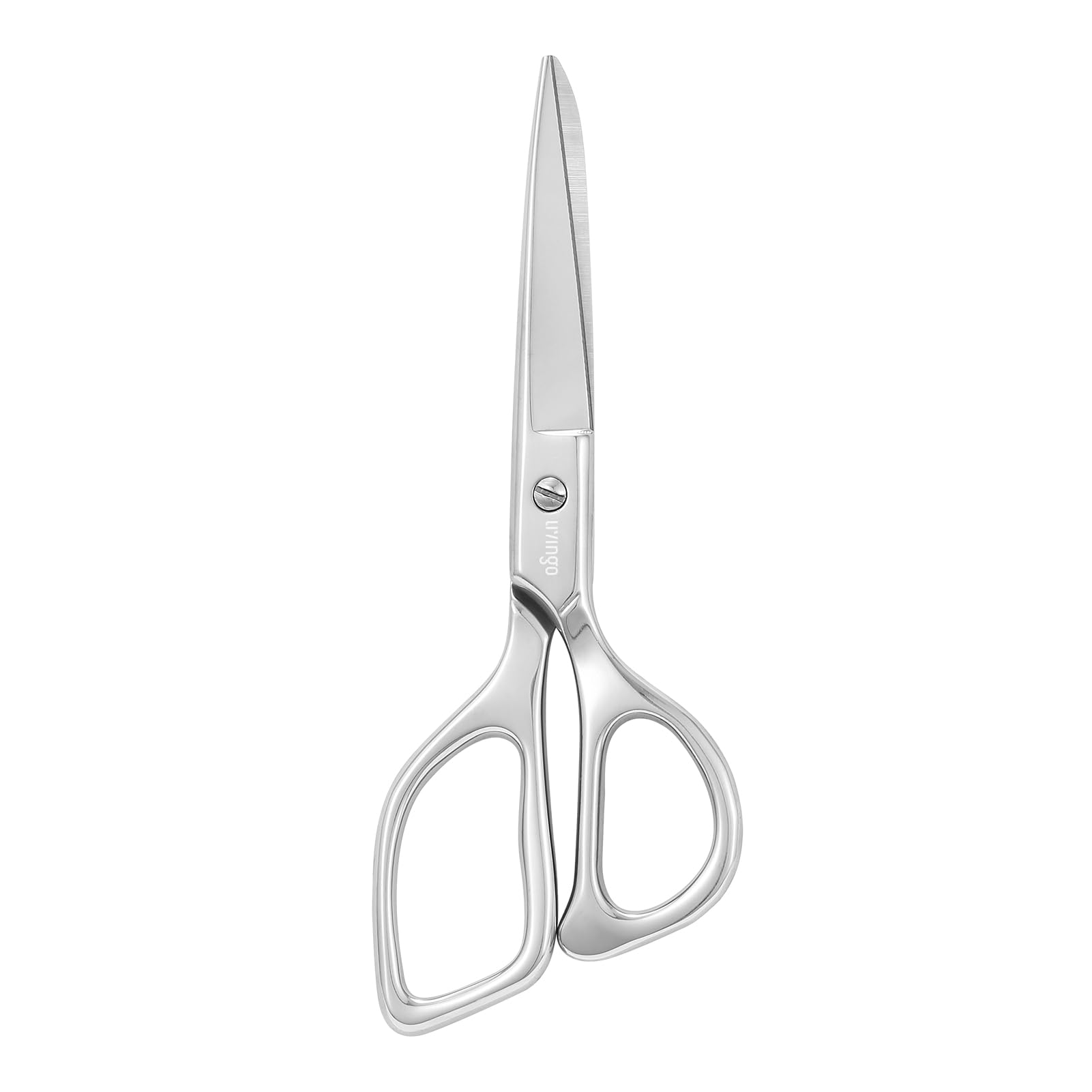
| LIVINGO 8″ Premium Tailor Scissors | Best budget | 8.6/10, shocking value | ~$10-15 | Check Price on Amazon |
| Fiskars Premier No. 8 Easy Action 10″ Shears | Best spring-action | 8.7/10, spring opens after each cut | ~$25-35 | Check Price on Amazon |
Prices move constantly on Amazon, every “Check Price on Amazon” link below takes you to the live listing.
Quick Picks
- Best overall: Gingher 8″ Knife Edge, the shears sewists hand down to their kids, ~$40-50.
- Best comfort: Fiskars 8″ RazorEdge Softgrip, cushioned handles and razor edge, ~$25-35.
- Best precision: Kai 5210 8″, Japanese stainless steel that glides through everything, ~$30-40.
- Best for slippery fabrics: Havel’s 5.5″ Serrated, serrated blade grips silk and satin, ~$15-20.
- Best budget: LIVINGO 8″ Premium Tailor, forged blades for the price of lunch, ~$10-15.
- Best spring-action: Fiskars Premier No. 8 Easy Action 10″, the spring does half the work, ~$25-35.
Detailed Reviews
1. Gingher 8-Inch Knife Edge Dressmaker’s Shears, Best Overall
Gingher has been the name in sewing shears since 1947, and the 8-inch knife-edge dressmaker’s shears are the reason. The blades are precision-ground to a true knife edge, which means they cut multiple layers of fabric cleanly all the way to the tip. The bent handle keeps the fabric flat on the table while you cut, so your long cuts stay straight.
Owners routinely say their Ginghers have lasted 10, 20, even 30 years. They come with a protective sheath and a lifetime warranty on materials and craftsmanship. This is the pair you buy once and stop thinking about scissors forever, as long as you keep them away from paper.
Good
✓ Precision-ground knife edge cuts to the very tip
✓ Bent handle holds fabric flat for accurate cuts
✓ Legendary durability, often lasts decades
✓ Cuts multiple layers of fabric cleanly
✓ Includes protective sheath, lifetime warranty
Watch out for
✕ Heavier than modern softgrip shears
✕ All-metal handles can be less comfortable on long sessions
✕ Needs occasional professional sharpening to stay at its best
✕ Premium price, though the cost per year is tiny
2. Fiskars 8″ RazorEdge Softgrip Scissors, Best Comfort
If Gingher is the heirloom, the Fiskars RazorEdge is the modern workhorse. The blades have Fiskars’ RazorEdge honing for an ultra-sharp edge that cuts cleanly to the tip, and the Softgrip handles are sculpted to fit your hand with cushioned touchpoints. Owners with hand fatigue report these are the most comfortable shears they have used.
They also come with a protective sheath, which is a nice touch at this price. For sewists who cut a lot but do not want to spend Gingher money, this is the sweet spot between comfort and performance.

Good
✓ RazorEdge blades cut cleanly all the way to the tip
✓ Softgrip handles reduce hand fatigue noticeably
✓ Ergonomic sculpted loops fit the hand naturally
✓ Includes protective sheath
✓ Full lifetime warranty
Watch out for
✕ Not quite the same edge longevity as forged Ginghers
✕ Handles are plastic, not heirloom material
✕ The bright orange and white styling is not for everyone
✕ Professional sharpening options are more limited
3. Kai 5210 8-inch Dressmaking Shears, Best Precision
Kai scissors are made in Japan from hardened stainless steel, and sewing forums consistently describe the cutting action as “gliding.” The 5210 is the 8-inch dressmaking size with ergonomically soft handles. Buyers say it cuts multiple layers of denim without complaint and trims quilting cotton without any fabric slippage.
Kai occupies an interesting middle ground: sharper out of the box than most Western shears in its price range, with a lighter feel than Gingher. If you value precision cutting and a smooth action, the 5210 is the pair to beat. It is also the favorite of many professional garment sewists.
Good
✓ Exceptionally sharp Japanese stainless steel
✓ Smooth, gliding cutting action owners love
✓ Soft ergonomic handles for fatigue-free cutting
✓ Cuts denim layers and delicate cotton equally well
✓ Lighter in hand than Gingher
Watch out for
✕ No included sheath, buy one separately
✕ Edge is so fine it needs careful handling, no paper ever
✕ Replacement and professional sharpening can be harder to find
✕ Handle design suits medium to large hands best
4. Havel’s 5.5″ Serrated Fabric Scissors, Best for Slippery Fabrics
Silk, satin, chiffon, and other slippery fabrics have a nasty habit of sliding between smooth scissor blades instead of cutting. The fix is a serrated blade: the fine teeth grip the fabric so it cuts instead of creeping. Havel’s 5.5-inch serrated scissors are the go-to recommendation for this job.
At 5.5 inches they are a detail-size shear, ideal for trimming, applique, and cutting slippery fabrics in controlled strokes rather than long pattern cuts. Note: we could not confirm a current Amazon listing for this exact model after two searches, so there is no buy link here. Havel’s serrated scissors are widely available through sewing retailers if you search the name.
Good
✓ Serrated blade grips slippery fabrics instead of pushing them
✓ Excellent for silk, satin, chiffon, and fine knits
✓ Compact 5.5″ size is great for detail and trim work
✓ Japanese stainless steel quality
Watch out for
✕ No confirmed Amazon listing at the time of writing
✕ Too short for long pattern cuts, it is a detail tool
✕ Serrated blades need specialist sharpening
✕ Not a substitute for full-size dressmaker’s shears
5. LIVINGO 8″ Premium Tailor Scissors, Best Budget
LIVINGO is a budget brand, but these tailor scissors get the kind of reviews that make you double-check the price. The blades are forged stainless steel (not stamped), which is unusual at this price point, and buyers consistently report clean cuts through multiple fabric layers right out of the package.
They are not Gingher. The fit and finish is rougher, and long-term edge retention will not match premium shears. But as a first pair of real fabric scissors, a backup pair, or a gift for a new sewist, the value is genuinely hard to beat. Just remember the rule: fabric only, never paper.
Good
✓ Forged stainless steel blades at a budget price
✓ Cuts cleanly through multiple layers
✓ Bent handle design like premium shears
✓ Excellent first pair for beginners
✓ Thousands of positive buyer reviews
Watch out for
✕ Fit and finish is not premium
✕ Edge retention will not match Gingher or Kai over years
✕ Quality control can vary between pairs
✕ Handles are basic, not ergonomic
6. Fiskars Premier No. 8 Easy Action 10″ Shears, Best Spring-Action
Long cutting sessions punish your hand with thousands of open-close cycles. The Easy Action design adds a spring that gently opens the blades after every cut, so your hand only does half the work. Owners with arthritis or hand weakness say this feature alone makes the difference between cutting comfortably and giving up.
At 10 inches overall with a long blade, these also power through long cuts and thick layers with fewer strokes. The bent handle keeps fabric flat on the table. Note on the name: Fiskars does not make a “PowerGear2” fabric scissor (PowerGear2 is their garden-tool technology). The Premier No. 8 Easy Action 10-inch shears are the correct spring-action sewing pick in this size.
Good
✓ Spring-action handle dramatically reduces hand fatigue
✓ Long 10″ blade covers more fabric per stroke
✓ Popular with sewists who have arthritis
✓ Bent handle keeps fabric flat
✓ Full lifetime warranty
Watch out for
✕ Bulky size is awkward for small hands and detail work
✕ The spring adds a part that can eventually wear
✕ Not as precise as an 8″ shear for curves
✕ Easy-open lock must be engaged for safe storage
What to Look For When Buying
- Never cut paper with fabric shears. This is the single biggest destroyer of good scissors. Keep a cheap pair of paper scissors in the same drawer.
- Blade length: 8 inches is the standard dressmaker size. Shorter shears (5-6″) are for detail work; longer ones (9-10″) for long cuts and thick layers.
- Bent vs straight handles: Bent handles keep fabric flat on the table for pattern cutting. Straight handles suit detail and embroidery work.
- Knife edge vs serrated: A knife edge slices cleanly through stable fabrics. A serrated edge grips slippery fabrics so they do not slide.
- Comfort: If you cut for long sessions, prioritize ergonomic handles or spring-action designs. Hand fatigue ruins cutting accuracy.
- Sheath included: A sheath protects the blades (and your fingers) in a drawer or bag. If your pick does not include one, buy one separately.
- Sharpening: Even the best shears eventually need sharpening. Check that your brand offers sharpening or that a local shop can handle the blade type.
Frequently Asked Questions
Can I use fabric scissors to cut paper?
You can, but you will regret it. Paper dulls the fine edge of fabric shears quickly, and resharpening costs more than a cheap pair of paper scissors. Keep them separate, always.
How do I know when my scissors need sharpening?
When they start folding or chewing fabric instead of slicing it, especially at the tips. If cleaning the blades and tightening the pivot screw does not fix it, they need sharpening.
Can I sharpen fabric scissors myself?
Light touch-ups with a proper scissor sharpener work for maintenance, but a truly dull pair deserves professional sharpening. Serrated blades in particular need a specialist. Many fabric stores offer or recommend sharpening services.
Are expensive scissors really worth it?
For regular sewists, yes. A $40 pair that lasts 20 years costs $2 a year and cuts better every single day than a $10 pair you replace every two years. Beginners can absolutely start with the LIVINGO and upgrade later.
What is the difference between shears and scissors?
Traditionally, shears are longer than 6 inches with one larger finger loop, designed for fabric. Scissors are shorter with equal loops. In practice, the terms are used interchangeably for sewing tools.
Should I oil my fabric scissors?
A drop of sewing machine oil at the pivot point occasionally keeps the action smooth. Wipe the blades clean afterward so oil does not transfer to fabric.